Introduction
Managing money becomes easier when you know where your income goes and what you want to achieve. Without a clear plan it can be difficult to save for emergencies. You may also struggle to control spending or prepare for important goals such as buying a home and retiring comfortably. A Personal Finance Plan gives you a practical way to organize your money and make informed financial decisions.
You do not need a high income or advanced financial knowledge to get started. You need an honest picture of your current situation and a realistic plan for improvement. By understanding your income and expenses you can decide how much to spend. You can also set savings goals and make a strategy for managing debt.
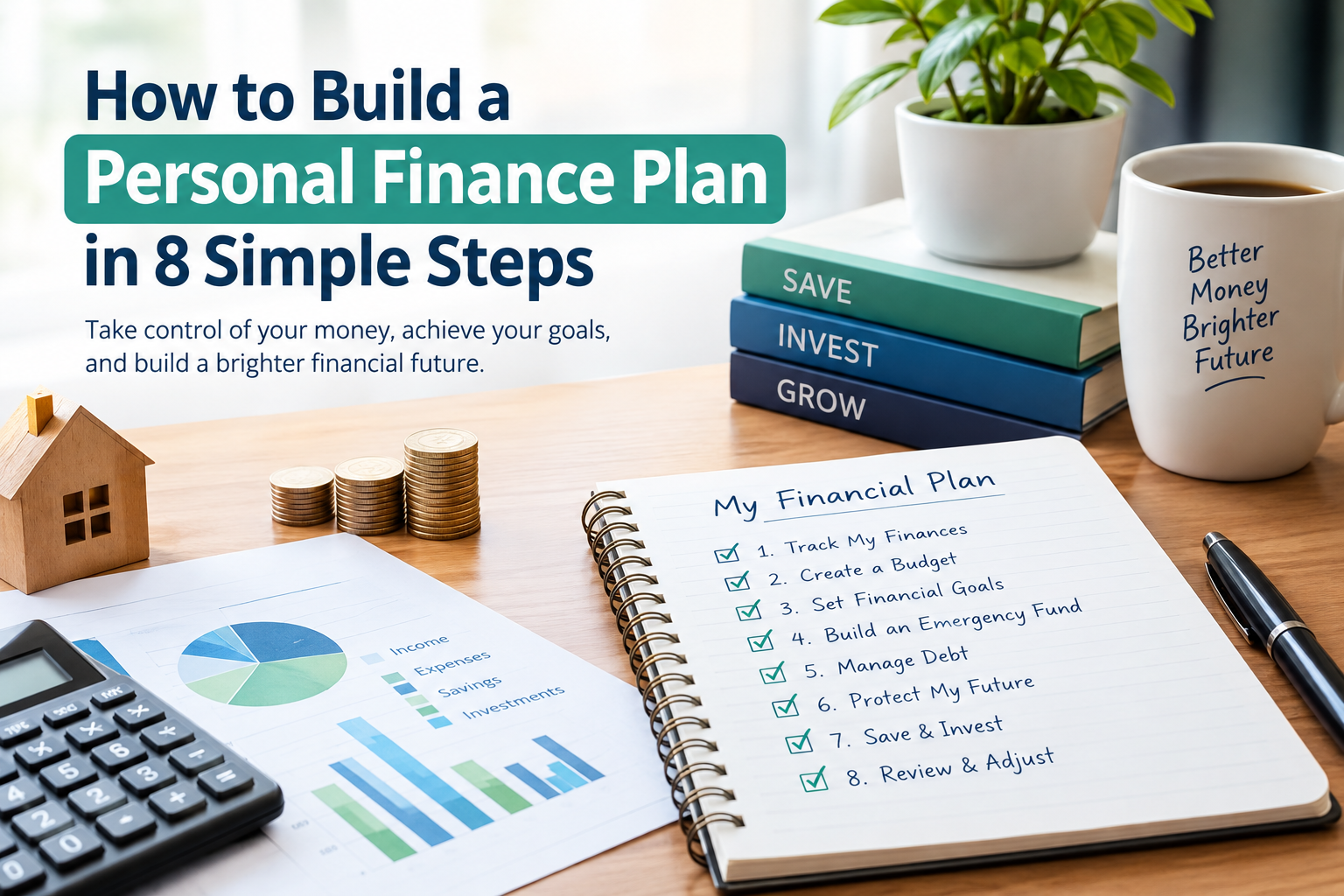
This guide explains how to build a Personal Finance Plan in eight simple steps. You will learn how to track your money and prepare for unexpected expenses. You will also discover how to set financial goals and review your progress over time. These steps can help you create a finance plan that fits your income and lifestyle.

What Is a Personal Finance Plan?
A Personal Finance Plan is a strategy for managing your income and expenses while working toward your financial goals. It brings together budgeting and saving with debt management and future finance planning. Depending on your needs it may also include insurance and investing. For example you might want to build an emergency fund and pay off credit card debt.
At the same time you may need to save for education or a home deposit. A written plan helps you understand which goals need attention first. A good plan is flexible. Your income and expenses can change because of a new job or family responsibilities. Regular reviews help you adjust your decisions when life changes.
Understand Your Current Financial Situation
Before setting goals you need to understand where you stand today. Start by listing your income and expenses along with your savings and debts. Use bank statements and bills to make your records as accurate as possible. Include income from employment and self-employment. Add any regular benefits or other reliable income. If your earnings change each month use a cautious estimate based on your recent income history rather than assuming every month will be strong.
Next list your essential expenses. These may include housing and food as well as utilities and transport. Record debt payments and insurance costs. Remember irregular expenses such as annual fees and home repairs. You should also calculate your net worth. Add the value of your assets such as savings and investments. Then subtract what you owe on loans and other debts.
This figure gives you a starting point for tracking your overall financial position. Do not worry if your starting position is not ideal. The purpose of this step is to understand your situation without judgment. Accurate information helps you make better decisions.
Create a Realistic Monthly Budget
A budget helps you decide how to use your income before you spend it. It also makes it easier to identify unnecessary costs and prepare for future bills. Divide your expenses into useful groups. Essential costs include housing and groceries. Flexible spending may include dining out and entertainment. Financial priorities include savings contributions and debt repayments.
Consider this example of a monthly budget for someone with a take-home income of 3,000 units in their local currency.
| Budget category | Monthly amount |
|---|---|
| Housing and utilities | 1,050 |
| Food and household items | 450 |
| Transport | 250 |
| Insurance and healthcare | 150 |
| Debt repayments | 250 |
| Savings and emergency fund | 400 |
| Personal spending | 300 |
| Other expenses | 150 |
| Total | 3,000 |
These figures are illustrative rather than recommended amounts. Housing costs and healthcare expenses vary greatly between countries and households. Compare your budget with your actual spending each month. If expenses exceed income you may need to reduce flexible spending or explore ways to increase earnings. If money remains after essential costs you can direct more toward savings or debt repayment.
Your budget should reflect your real life. A plan that is too restrictive may become difficult to maintain. Start with changes you can follow consistently and adjust them when necessary.
Set Clear Financial Goals
A Personal Finance Plan works better when it has specific goals. Instead of saying you want to save more money decide exactly what you are saving for and when you hope to reach the target.
Divide your goals into three groups:
Short-term goals may include paying an upcoming bill or building initial emergency savings. These goals often need attention within the next year.
Medium-term goals may include replacing a car or saving for education. They may require several years of regular contributions.
Long-term goals can include retirement or a future property purchase. These goals need more finance planning because your circumstances and the cost of living may change over time.
For each goal write down the amount you need and your target date. If you want to save 1,200 units over twelve months you would need to set aside 100 units each month before considering interest or fees. Choose goals that fit your current income. If you have several priorities start with urgent bills and costly debt while building some protection against unexpected expenses. You can then increase contributions toward longer-term goals as your situation improves.
Build an Emergency Fund
An emergency fund is money reserved for unexpected expenses. It can help cover urgent repairs or essential bills if your income falls. Having accessible savings may also reduce the need to borrow when an emergency occurs. Start with a small target if saving a large amount feels difficult. Your first goal might be enough to cover one urgent expense. Over time you can work toward a larger reserve based on your essential monthly costs.
A common finance planning target is three to six months of essential expenses. However the right amount depends on your circumstances. Someone with stable employment and few dependants may need a different reserve from a freelancer with irregular income or a household with one main earner.
Keep emergency money somewhere safe and accessible. Consider account fees and withdrawal rules before choosing a savings account. Avoid putting money needed for emergencies into volatile investments because its value could fall when you need it. Make regular contributions whenever your budget allows. Even a small amount can help you build the habit. If you use the fund for a genuine emergency plan to rebuild it when your finances recover.

Manage Debt Strategically
Debt can affect your ability to save and achieve other financial goals. High interest charges can make balances difficult to reduce if you only make small payments. Your Personal Finance Plan should therefore include a clear debt repayment strategy. Start by listing each debt with its balance and interest rate. Record the minimum payment and due date as well. Continue making required payments while deciding how to direct any extra money. Two common repayment methods are the debt avalanche and the debt snowball.
The debt avalanche method directs extra payments toward the debt with the highest interest rate first. You continue making minimum payments on the other debts. This approach can reduce total interest costs when other factors remain equal.
The debt snowball method focuses extra payments on the smallest balance first. Clearing a small debt can provide motivation to continue. However this method may cost more in interest if a larger debt has a much higher rate.
Choose a method you can follow consistently. Before making extra payments check whether your loan has early repayment charges or other conditions. If you are struggling with essential bills seek support from a reputable debt advice service in your country. Avoid taking on new debt for unnecessary purchases while you work on repayment. Also consider keeping some accessible savings so a sudden expense does not force you to borrow again.
Protect Your Financial Future
Financial planning is not only about saving and spending. It also involves preparing for events that could affect your income or create major expenses. Review the insurance available to you and consider which types of protection fit your situation. Depending on your country and circumstances these may include health or disability cover and life insurance for people who depend on your income.
Homeowners and tenants may also need suitable property or belongings cover. Read policy conditions carefully. Check exclusions and deductibles along with coverage limits and renewal costs. The cheapest policy may not provide enough protection while a policy with extensive coverage may be more than you need.
Protect your financial accounts too. Use strong unique passwords and multi-factor authentication where available. Be cautious about unexpected messages asking for account details or promising guaranteed investment profits. Keep important financial records organized. Make sure you know how to access your accounts and bills. A simple record of insurance details and payment dates can help you respond more effectively when a problem occurs.
Plan for Saving and Investing
Once your essential expenses and urgent debt needs are under control you can decide how to save for future goals. The right approach depends on when you will need the money and how much risk you can accept. Savings accounts are often useful for emergency reserves and near-term goals. They provide easier access than many investments although account terms and protection arrangements vary by country.
Investing may be appropriate for longer-term goals such as retirement. Different investments carry different risks. Stocks and funds can lose value and returns are not guaranteed. Bonds also carry risks including interest rate and credit risk. Before investing learn about fees and taxes as well as diversification and your investment time frame. Avoid investing money you need soon in assets that could fluctuate significantly. Do not assume past performance guarantees future results.
For example someone saving for a home deposit needed in the next year may prioritize capital preservation and access to their money. Someone investing for retirement decades away may be able to consider a wider range of investments depending on their circumstances. Automating regular savings or investment contributions can make the process easier. Set an amount that your budget can support and review it when your income changes. If you need advice tailored to your circumstances consider a qualified financial professional who is authorized in your jurisdiction.
Review and Improve Your Plan Regularly
Your financial circumstances will not stay the same forever. You may receive a pay increase or change jobs. Housing costs may rise and family responsibilities may grow. Reviewing your Personal Finance Plan helps you respond to these changes. Set aside time each month to compare your budget with your actual spending. Check whether bills were paid on time and whether you met your savings target. If you spent more than expected identify the reason instead of simply abandoning the plan.
A more detailed review every three to six months can help you assess your progress toward larger goals. Review your debt balances and emergency savings. Check whether your insurance and investment choices still match your needs. Update your plan after major life events. Moving home or starting a family may change your spending priorities. A job loss may require you to pause some goals and focus on essential costs.
Track progress using a spreadsheet or a budgeting tool you trust. Keep the process simple enough to maintain. The aim is not to follow a perfect plan every month. The aim is to make informed decisions and improve your financial position over time.
Common Personal Finance Planning Mistakes to Avoid
One common mistake is setting goals that do not match your income. A savings target that leaves too little for essential expenses can be hard to maintain. Begin with realistic amounts and increase them as your situation allows. Another mistake is ignoring irregular costs. Annual insurance payments and home repairs can disrupt a monthly budget if you do not plan for them. Estimate these expenses and set money aside when possible.
Some people focus on investing before addressing high interest debt or building accessible emergency savings. The right order depends on individual circumstances but borrowing costs and immediate financial needs deserve careful attention. Finally avoid comparing your progress with someone else’s. Income and living costs vary. Your plan should reflect your responsibilities and goals rather than pressure from social media or unrealistic promises of quick wealth.

Frequently Asked Questions
Q1. What Is a Personal Finance Plan?
A Personal Finance Plan is a structured approach to managing income and expenses while working toward financial goals. It can include budgeting and saving as well as debt repayment and investing.
Q2. How Do I Start a Personal Finance Plan?
Begin by listing your income and expenses along with savings and debts. Then prepare a realistic budget and choose a few important financial goals. Review your progress regularly and adjust your personal finance plan when needed.
Q3. How Much Money Should I Save Each Month?
There is no single amount that suits everyone. Your savings target depends on income and essential costs as well as debt and financial goals. Start with an affordable amount and increase it when your budget allows.
Q4. Should I Pay Off Debt or Build an Emergency Fund First?
The answer depends on your debt costs and immediate needs. Keep up with required payments and consider building some emergency savings while addressing high interest debt. This can reduce the chance that an unexpected bill creates more debt.
Q5. How Often Should I Review My Personal Finance Plan?
Review your spending and budget each month. Reassess your longer-term goals every few months and update the plan after major changes to your income or family circumstances.
Final Thoughts
Building a Personal Finance Plan does not require complicated calculations or a high income. It begins with understanding your money and making practical choices about how to use it. A realistic budget can help you manage spending while clear goals give your saving efforts direction.
Start with the steps that matter most today. Track your expenses and prepare for emergencies. Make a manageable debt repayment plan and consider suitable ways to protect and grow your money over time. Review your progress regularly and make changes when life requires them.
The most useful plan is one you understand and can follow. Consistent decisions can help you build greater financial stability and prepare for future goals. Give yourself time to learn and improve as your circumstances change.
1 thought on “How to Build a Personal Finance Plan in 8 Simple Steps”