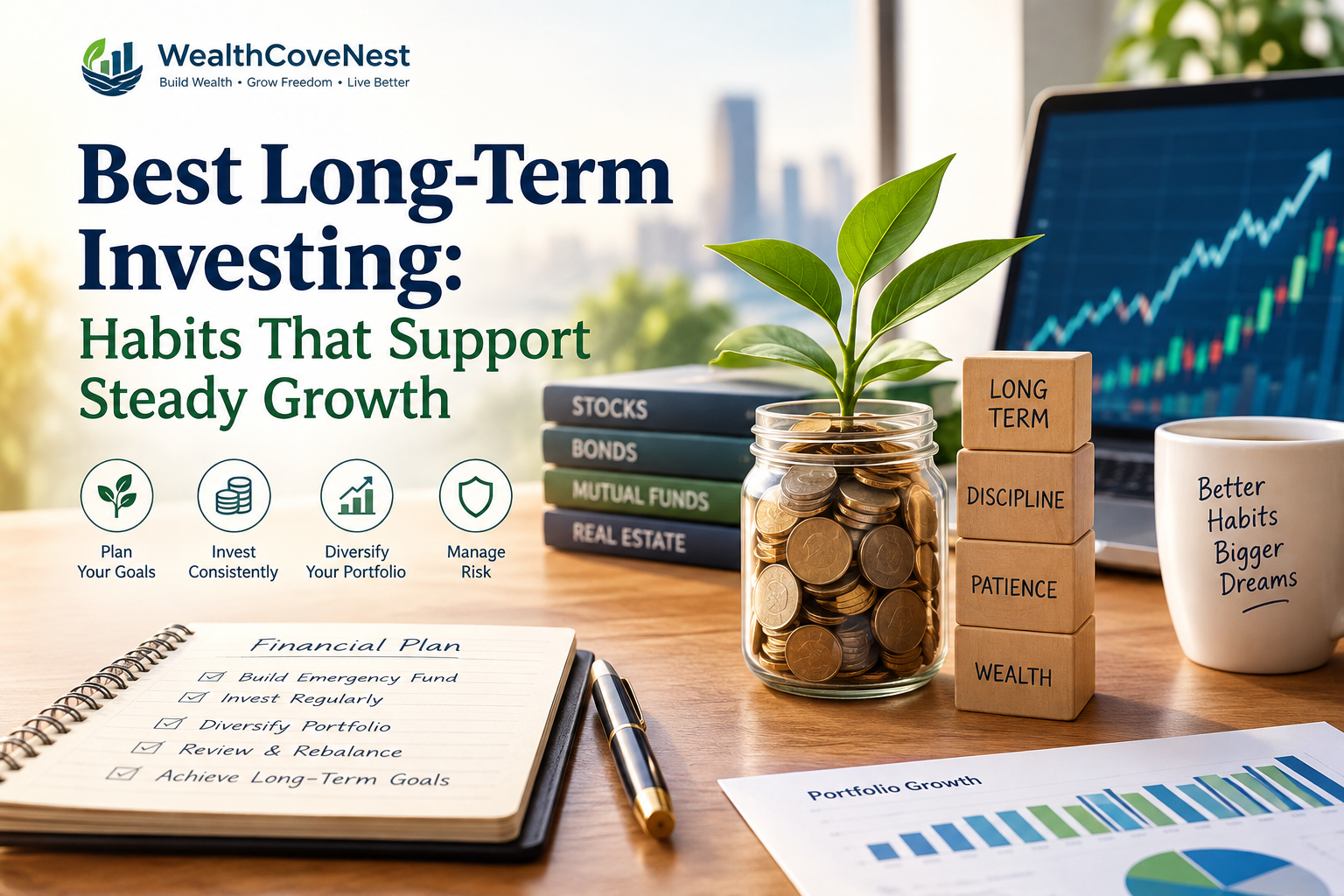
Introduction
Building wealth is rarely about making one perfect investment. It usually involves making sensible financial decisions repeatedly and giving those decisions enough time to work. Many people want to grow their money but feel confused by market changes and the large number of investment options available. Developing a clear plan can make the process easier to understand and manage.
Long-Term Investing focuses on building wealth over several years or decades rather than trying to make quick profits from short-term price movements. It encourages investors to set realistic goals and follow a consistent strategy. Although markets can rise and fall unexpectedly, a thoughtful approach can help investors avoid emotional decisions and stay focused on their financial future.
The good news is that you do not need to be a financial expert to develop better investment habits. You need a clear understanding of your goals and a willingness to learn. Regular contributions and sensible diversification can also help you build a stronger financial foundation over time.
This guide explains the habits that support Long-Term Investing and shows how to apply them in everyday life. You will learn how to manage risk and control investment costs while creating a strategy that fits your circumstances.

What Is Long-Term Investing?
Long-Term Investing is a strategy in which people purchase investments with the intention of holding them for an extended period. Depending on the goal, this period may last five years or considerably longer. Common goals include retirement planning and building future financial security. Investors may choose stocks and exchange-traded funds (ETFs) or mutual funds and bonds. Each option has different characteristics and risks.
The right combination depends on an individual’s financial goals and ability to tolerate losses. Unlike short-term trading, Long-Term Investing does not require investors to respond to every market movement. Instead, it encourages them to focus on the reasons they invested and whether their overall plan remains appropriate.
For example, someone saving for retirement in 25 years may have more time to recover from market downturns than someone who needs the same money for a home purchase next year. However, a longer timeframe does not guarantee positive returns. The US Securities and Exchange Commission provides useful educational information about investment basics and financial planning. Investors should understand the risks before choosing any investment product.
Set Clear and Realistic Financial Goals
Successful Long-Term Investing starts with a clear purpose. Without specific goals, it becomes difficult to decide how much money to invest or which types of investments may be suitable. Begin by identifying what you want your investments to achieve. Your goals might include retirement savings or funding your children’s education. You may also want to build wealth for future flexibility.
Once you know your goals, estimate how much money you may need and when you expect to use it. These details help you determine an appropriate investment timeframe.
Separate Short-Term and Long-Term Goals
Not every financial goal belongs in the stock market. Money needed soon for rent or emergency expenses should generally remain accessible and protected from substantial market fluctuations. For example, imagine that you want to purchase a home in two years. Long-Term Investing the entire down payment in volatile stocks could leave you with less money when you need it.
By contrast, retirement savings intended for use several decades from now may be suitable for a different investment approach, depending on your circumstances. Long-Term Investing works best when your investments match the timeframe of your goals. Review those goals whenever your income or family circumstances change.
Invest Regularly Instead of Waiting for the Perfect Time
One of the most useful Long-Term Investing habits is making regular contributions. Rather than trying to predict the best day to buy investments, consider investing a manageable amount at consistent intervals. This approach is often called dollar-cost averaging when a fixed amount is invested at regular intervals regardless of market prices. Investors outside the United States may encounter different terminology for the same basic approach.
For example, suppose you invest $150 every month. Some months your money will purchase more fund units because prices are lower. In other months, the same contribution will purchase fewer units because prices are higher. Regular contributions create a routine and can reduce the temptation to wait indefinitely for the perfect entry point. However, they do not guarantee profits or prevent losses. Long-Term Investing a lump sum earlier may also produce better results when markets subsequently rise.
Make Investing Part of Your Budget
Start with an amount that you can afford after covering essential expenses and maintaining appropriate emergency savings. You could schedule an automatic contribution after receiving your salary. This makes investing part of your normal financial routine instead of a decision you must reconsider every month.
As your income increases, you may gradually increase your contributions. Even modest increases can make a difference over a long period. The key principle behind Long-Term Investing is consistency rather than trying to make every contribution perfectly timed.
Understand Compound Growth
Compound growth occurs when investment returns remain invested and potentially generate additional returns. Over time, this process can help an investment balance grow more quickly than it would through contributions alone.
Consider an example in which you invest $5,000 and earn a hypothetical annual return of 6%. If the investment earns that return and all gains remain invested, the balance could grow to approximately $8,954 after 10 years. This calculation assumes a constant annual return and excludes taxes and fees. Actual investment returns fluctuate and may be negative in some years.
| Investment period | Hypothetical balance |
|---|---|
| Initial investment | $5,000 |
| After 5 years | $6,691 |
| After 10 years | $8,954 |
| After 20 years | $16,036 |
These figures illustrate how compounding works. They are not predictions of future performance.
Give Your Investments Time
Time can be an important advantage because it allows contributions and potential returns to accumulate. However, the outcome depends on investment performance and the costs involved.
Long-Term Investing gives compounding more time to operate, but it cannot eliminate market risk. An investment that performs poorly for an extended period may still deliver disappointing results. You can learn more about compounding and saving through Investor.gov’s official investment education resources.
Diversify Your Investment Portfolio
Diversification means spreading your investments across different assets rather than relying heavily on a single company or market. It is an important part of managing investment risk. For example, a portfolio that holds shares in only one company depends heavily on that company’s performance. If the business encounters serious problems, the portfolio could suffer a substantial loss.
A diversified portfolio may include investments across multiple companies and industries. Depending on your needs, it could also include bonds and international investments.
Choose Investments That Serve Different Purposes
Stocks can provide opportunities for growth but may experience substantial price fluctuations. Bonds may provide interest income and behave differently from stocks, although they also carry risks. ETFs and mutual funds can make diversification easier by providing exposure to multiple investments through a single product. However, not every fund is broadly diversified. A fund that concentrates on one industry may still carry considerable risk.
Long-Term Investing benefits from diversification because it reduces dependence on any single investment. Nevertheless, diversification cannot guarantee profits or prevent losses during a broad market decline. The US Securities and Exchange Commission explains these principles in its guide to asset allocation and diversification.
Keep Investment Fees Under Control
Investment fees may seem small when viewed individually. However, recurring costs reduce the amount of money available to generate future returns. Common expenses include fund management fees and brokerage commissions. Depending on your country and account, you may also encounter platform charges and transaction costs.
Imagine two otherwise identical investments that earn the same gross return. If one charges higher annual fees, its net return will generally be lower. Over several decades, the difference can become meaningful because money paid in fees is no longer available to compound.
Compare the Total Cost
Before choosing an investment product, review its expense ratio and any additional charges. Check whether your broker charges for purchases or sales and whether currency conversion fees apply. International investors should also understand account fees and any taxes that may affect their returns.
Long-Term Investing often involves holding assets for years. This makes cost awareness especially valuable because recurring charges can accumulate over time. The SEC published an investor bulletin on July 23, 2025, explaining how investment fees and expenses affect portfolios.

Avoid Emotional Investment Decisions
Market prices can change sharply during economic uncertainty. Investors may feel excited when prices rise and frightened when prices fall. These emotions can encourage poor decisions. Some people purchase investments after prices have already risen substantially because they fear missing out.
Others sell during a downturn without considering their original goals. Long-Term Investing encourages investors to make decisions according to a plan rather than reacting to every headline.
Create Rules Before Markets Become Uncertain
Write down why you selected each investment and what role it serves in your portfolio. Decide in advance how often you will review your holdings and which changes would justify adjusting your strategy. For example, a temporary market decline may not require a change if your goals and financial circumstances remain the same. However, a change in income or a shorter investment timeframe may justify reviewing your portfolio.
Avoid checking prices so frequently that ordinary market movements cause unnecessary stress. A regular review schedule can help you remain informed without encouraging impulsive decisions. Remember that patience does not mean ignoring serious problems. If an investment’s underlying risks change or your original reasons for holding it no longer apply, reassess the position carefully.
Maintain an Emergency Fund and Manage Debt
Before increasing your investment contributions, consider if your financial foundation is strong enough to support them. An emergency fund can help cover unexpected expenses such as medical bills or temporary loss of income. Without accessible savings, you might have to sell investments during a market downturn or borrow money at a high interest rate.
The appropriate emergency fund depends on your expenses and personal circumstances. Some people need a larger reserve because their income is irregular or they support dependants. High-interest debt also deserves attention. Interest charges on credit cards and certain loans can outweigh the returns you might reasonably expect from investments.
Balance Saving, Debt Repayment and Investing
Suppose you carry credit card debt with a high interest rate while considering an investment with uncertain returns. Paying down that debt may offer a more reliable financial benefit than long-term investing additional money.
However, the decision depends on your debt terms and overall circumstances. Consider any employer retirement contributions or other account benefits that may affect your priorities. Long-Term Investing should fit into a broader financial plan. Maintaining cash reserves and managing expensive debt can help you avoid withdrawing money from your portfolio at an inconvenient time.
Review Your Portfolio and Rebalance When Needed
A good investment strategy requires occasional reviews. Your portfolio can change over time as different investments produce different returns. For example, imagine that you initially allocate 70% of your portfolio to stocks and 30% to bonds. If stocks perform particularly well, their share of the portfolio may rise above your original target.
Rebalancing means adjusting your holdings to bring the portfolio closer to your intended allocation. This may involve selling some assets that have grown beyond their target weight or directing new contributions toward underrepresented assets.
Use a Consistent Review Schedule
You could review your investments every six or twelve months or when your allocation moves beyond a threshold you have selected. The appropriate schedule depends on your portfolio and circumstances. Frequent changes are not necessarily better. Trading too often can increase costs and may create unnecessary tax consequences.
Long-Term Investing works best when reviews have a clear purpose. Focus on if your portfolio still matches your goals and risk tolerance rather than trying to predict every market movement. The Financial Conduct Authority’s guide to diversification also explains how spreading investments can help manage risk.
Increase Your Financial Knowledge Over Time
Financial markets and investment products can be complicated. Improving your knowledge helps you understand the decisions you make and identify risks that may not be obvious at first. Start with basic topics such as asset allocation and fund fees. Then learn how inflation affects purchasing power and how taxes influence long-term investing outcomes.
Use trustworthy educational resources and compare information from reliable sources. Be cautious about social media posts that promise extraordinary returns or recommend investments without explaining their risks.
Recognise Unrealistic Promises
No legitimate investment can guarantee high returns without risk. Be particularly careful with unsolicited messages and pressure to transfer money quickly. Check whether investment providers are authorised by the relevant regulator in your country. Understand how your assets are held and what protections may apply if a provider fails.
Long-Term Investing requires informed decisions rather than blind trust in market predictions. You do not need to understand every financial product, but you should understand the investments you own.
Avoid Common Long-Term Investing Mistakes
Even experienced investors can make mistakes. Recognising common problems can help you develop a more disciplined approach.
Chasing recent performance: An investment that performed well last year may not perform well next year. Review its risks and suitability rather than relying only on past returns.
Lacking diversification: Concentrating your money in one company or industry can expose you to unnecessary risk. Consider whether your holdings provide adequate diversification.
Ignoring fees: Small recurring charges can reduce your net returns over time. Compare the full costs before selecting an investment.
Investing money needed soon: Market downturns can occur when you least expect them. Keep near-term spending needs separate from money intended for long-term goals.
Changing strategies too frequently: Constantly switching investments can increase costs and make it harder to follow a coherent plan.
Expecting guaranteed growth: Markets do not move upward in a straight line. Prepare for losses and understand that you may not achieve your financial target.
Long-Term Investing is not about avoiding every mistake. It is about developing sensible habits and correcting problems before they undermine your broader financial goals.
A Practical Example of Long-Term Investing
Consider an investor who contributes $200 every month for 20 years. The total amount contributed would be $48,000. If the investments earned a hypothetical annual return of 6% compounded monthly, with contributions made at the end of each month, the account could grow to approximately $92,400 before taxes and fees. The additional amount would come from investment growth rather than contributions alone.
However, this example assumes a consistent return and does not reflect the fluctuations of real markets. Actual outcomes could be higher or lower. Inflation would also affect the future purchasing power of the balance. The example demonstrates why regular contributions and time can matter. Long-Term Investing gives investors a structured way to work toward future goals, but it cannot promise a particular result.

Frequently Asked Questions
Q1. What is Long-Term Investing?
Long-Term Investing involves holding investments for several years or decades to work toward financial goals. It often focuses on regular contributions and a diversified portfolio rather than frequent trading.
Q2. How much money do I need to start investing for the long term?
The amount depends on your budget and the minimum requirements of your chosen investment platform. Some funds and brokers allow small contributions. Start only when you can afford to invest after covering essential expenses and appropriate emergency savings.
Q3. Is Long-Term Investing safer than short-term trading?
A longer investment period can give you more time to manage market fluctuations, but it does not remove risk. Investments can lose value over long periods. Your asset allocation and financial circumstances remain important.
Q4. Which investments are suitable for long-term goals?
Possible options include diversified stock funds and bond funds or a combination of different asset classes. The appropriate choice depends on your timeframe and risk tolerance. Research costs and risks before investing.
Q5. How often should I review my investments?
Many investors review their portfolios every six or twelve months. You may also need a review after a major life change. Avoid making unnecessary trades simply because prices move daily.
Final Thoughts
Building wealth requires patience and a clear understanding of your financial priorities. You do not need to predict every market movement or discover the next successful company to develop a sensible investment plan. The most useful habits include setting realistic goals and long-term investing regularly while controlling costs and maintaining a diversified portfolio. Managing debt and keeping emergency savings can also help protect your financial stability.
Long-Term Investing offers a structured approach to pursuing future financial goals, but it does not eliminate uncertainty. Markets can decline and returns can disappoint. Your results will depend on the investments you choose and the costs you pay as well as the time you remain invested.
Start with manageable steps and review your strategy as your circumstances change. With consistent effort and informed decisions, you can build a stronger foundation for your financial future without relying on promises of quick profits.
1 thought on “Best Long-Term Investing: Habits That Support Steady Growth”