Introduction
The envelope budgeting method is a simple way to organize your money and control spending. It helps you decide where your income should go before you start spending. Instead of wondering where your money went at the end of the month you give every part of your budget a clear purpose.
This approach can be useful for people who struggle with overspending or want a clearer view of their daily expenses. You can use physical envelopes with cash or digital tools that divide your money into separate spending categories.
In this guide for WealthCoveNest.com you will learn how the envelope budgeting method works how to set it up and which people may benefit most. You will also discover its limitations and practical ways to adapt it to your financial situation.

What Is the Envelope Budgeting Method?
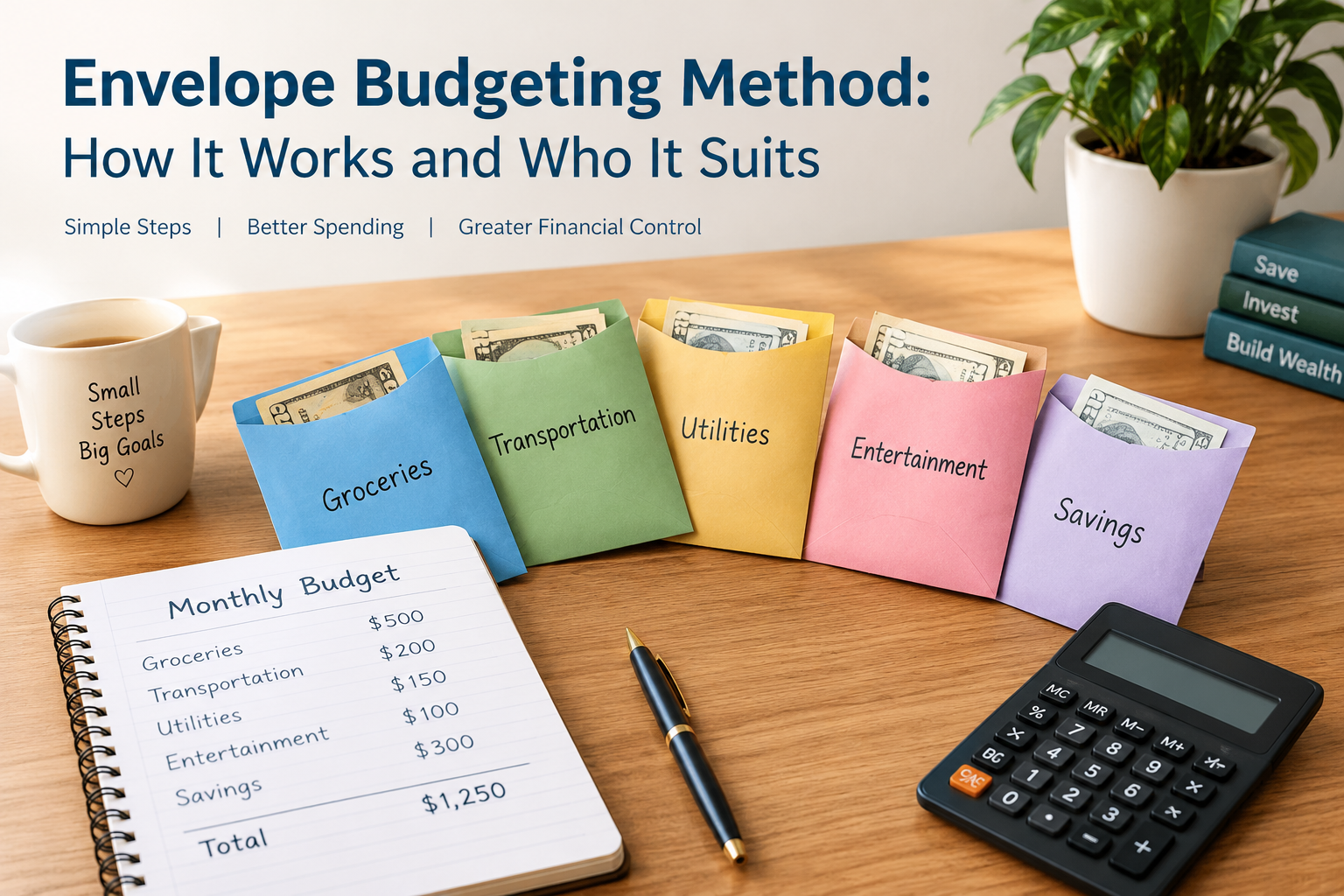
The envelope budgeting method divides your available spending money into separate categories. Each category has a spending limit for a particular period. Traditional envelopes hold physical cash while digital envelopes use apps or spreadsheets to track the same amounts. For example you might create envelopes for groceries transportation entertainment and personal shopping. If you allocate $300 to groceries for the month you should aim to keep grocery spending within that limit.
This system makes your available spending money easier to see. It also encourages you to think before making purchases. According to the envelope approach can help people manage variable expenses and become more intentional about their spending. The key idea is simple: decide how much you can afford to spend before you spend it.
How Does the Envelope Budgeting Method Work?
The envelope budgeting method follows a straightforward process. You plan your income allocate money to different categories and track each purchase against the relevant limit.
Calculate Your Monthly Income
Start by calculating the money you actually receive after taxes and other payroll deductions. If you earn income from several sources include those amounts too.
If your income changes each month use a conservative estimate based on your recent earnings. Avoid allocating money that you have not received yet.
List Your Expenses
Review bank statements receipts and previous spending records. Separate essential costs from flexible expenses.
Essential expenses may include:
- Rent or mortgage payments
- Groceries and household supplies
- Electricity and other utilities
- Transportation
- Insurance and required debt payments
Flexible expenses may include dining out hobbies clothing and entertainment. You should also plan for savings and irregular costs such as annual insurance payments or vehicle repairs.
Create Your Envelopes
Choose categories that match your lifestyle. The envelope budgeting method works best when categories are specific enough to guide spending without becoming difficult to manage.
You could start with five or six envelopes rather than creating one for every small purchase. For example create categories for groceries transportation household needs entertainment savings and personal spending.
Assign an Amount to Each Category
Give every category a realistic spending limit. Your total allocations should not exceed your available income after accounting for bills and financial priorities. For example if your monthly take-home income is $2,500 you might allocate $500 to groceries and household supplies. You could assign $150 to transportation and $100 to entertainment.
These amounts are illustrations rather than universal recommendations. Your actual budget depends on your location household size living costs and financial obligations.
Track Spending Throughout the Month
Whenever you make a purchase subtract it from the relevant envelope balance. If you spend $40 on groceries from a $500 allocation you have $460 remaining.
The envelope budgeting method becomes more useful when you check balances regularly. This helps you notice when spending is rising faster than expected and gives you time to adjust.
A Practical Envelope Budgeting Method Example
Imagine a household receives $3,000 in monthly take-home income. After reviewing its expenses the household creates the following plan.
| Budget category | Monthly allocation |
|---|---|
| Rent and housing costs | $1,000 |
| Groceries and household supplies | $450 |
| Utilities and phone | $200 |
| Transportation | $250 |
| Insurance and debt payments | $300 |
| Dining and entertainment | $150 |
| Personal spending | $150 |
| Savings and irregular expenses | $500 |
| Total | $3,000 |
This example shows how the envelope budgeting method gives every part of the income a planned purpose. The amounts are illustrative and may not fit every household. Suppose the household spends $120 of its $150 entertainment allocation during the first two weeks. It has $30 left for the rest of the month. That remaining balance gives the household a clear signal to limit further entertainment spending.
If grocery costs rise unexpectedly the household can review its remaining categories. It may move a reasonable amount from flexible spending if doing so will not affect essential bills. The envelope budgeting method works through deliberate choices rather than automatically solving every financial problem.

Benefits of the Envelope Budgeting Method
Better Spending Awareness
One major benefit is visibility. You can quickly see how much money remains for groceries entertainment or other flexible expenses. The envelope budgeting method can help you recognize spending patterns that are easy to overlook when using cards for every purchase.
Fewer Impulse Purchases
A spending limit creates a reason to pause before buying something unnecessary. If your entertainment envelope is nearly empty you may decide to postpone a purchase or choose a less expensive activity.
Easier Financial Conversations
Couples and families can use shared categories to discuss priorities. Agreeing on grocery costs savings goals and personal spending limits may reduce confusion about how money should be used.
More Intentional Saving
You can create envelopes for future expenses such as holidays car repairs or annual fees. This helps you plan for costs that do not arrive every month. The envelope budgeting method can also complement a separate emergency savings account.
What Are the Limitations?
Although the envelope budgeting method can improve spending awareness it has drawbacks that deserve attention. Cash can be lost or stolen. Carrying large amounts of money creates a risk that digital records do not have in the same way. Keep physical cash secure and avoid withdrawing more than you need. Some payments require digital transactions. Rent subscriptions online purchases and automatic bills may not be convenient to pay with cash. A hybrid system can keep these payments in your bank account while using cash envelopes for everyday spending.
Irregular income can make planning harder. Freelancers and seasonal workers may need to budget around confirmed income and prioritize essential bills before funding flexible categories. Unexpected expenses still happen. A strict limit should not prevent you from dealing with an urgent need. Build a buffer and revise allocations when circumstances change.
It requires regular maintenance. You need to record spending and review balances. If you stop updating your envelopes the figures may no longer reflect your available money. For these reasons the envelope budgeting method should be treated as a practical tool rather than a guarantee of financial success. Guidance from the Government of Canada also describes physical and virtual envelopes as options for managing planned spending.
Who Should Use This Budgeting Approach?
The envelope budgeting method may suit people who frequently overspend on nonessential purchases or find ordinary budgeting spreadsheets difficult to follow. It may also help students and beginners who want to learn how spending decisions affect the money they have left. Households with shared expenses can use agreed categories to make their plans more transparent.
However this approach may feel restrictive to people who prefer flexible spending or already manage their money effectively through a banking app. People with irregular income may need additional planning for essential expenses and low-income months. The best choice is the system you can maintain consistently. You can also combine envelope budgeting with a zero-based budget or a separate savings plan.
How to Start an Envelope Budget Today
Follow these practical steps to put the envelope budgeting method into action.
- Review your income and recent expenses.
- Identify your essential bills and financial priorities.
- Select a few flexible spending categories.
- Set realistic limits based on your actual costs.
- Choose physical envelopes a spreadsheet or a suitable budgeting app.
- Record each purchase and check balances weekly.
- Review the results at the end of the month and adjust your limits.
Start with only a few categories. Once the routine becomes easier you can add more detail where it genuinely helps. The envelope budgeting method does not require an expensive app or complicated financial knowledge. A notebook and a calculator may be enough to get started.
Frequently Asked Questions
Q1. Is the Envelope Budgeting Method Good for Beginners?
Yes. The envelope budgeting method is easy to understand because it separates money into clear spending categories. Beginners can start with groceries and entertainment before adding more categories.
Q2. Can I Use This Method Without Cash?
Yes. A digital envelope budgeting method uses a spreadsheet or app to track category balances. Your money can remain in your bank account while you track how much is assigned to each purpose.
Q3. What Should I Do When an Envelope Runs Out?
Pause nonessential spending in that category and review your remaining budget. If necessary you can move money from another flexible category. The envelope budgeting method works best when you make that decision consciously rather than ignoring the original limit.
Q4. Should Savings Have Their Own Envelope?
Yes. You can include savings goals in your envelope budgeting method. For emergency savings consider keeping the money in a suitable bank account rather than storing large amounts of cash at home.
Q5. Can This Method Help Me Pay Off Debt?
It can help you organize your spending and identify money that may be available for debt repayment. The envelope budgeting method does not eliminate debt by itself. You still need a realistic repayment plan and enough income to cover your obligations.
Final Thoughts
The envelope budgeting method offers a practical way to give your money a purpose before spending it. By setting category limits and checking balances regularly you can become more aware of everyday expenses and make better-informed decisions.
Start small and choose categories that match your actual spending habits. Use physical cash digital envelopes or a combination of both. Review your results each month and make adjustments when your needs change.
The most effective Budgeting Method is one that supports your priorities without making everyday money management unnecessarily difficult. With consistency and realistic limits this approach can become a useful part of a broader financial plan.
5 thoughts on “Envelope Budgeting Method: How It Works and Who It Suits”