Introduction
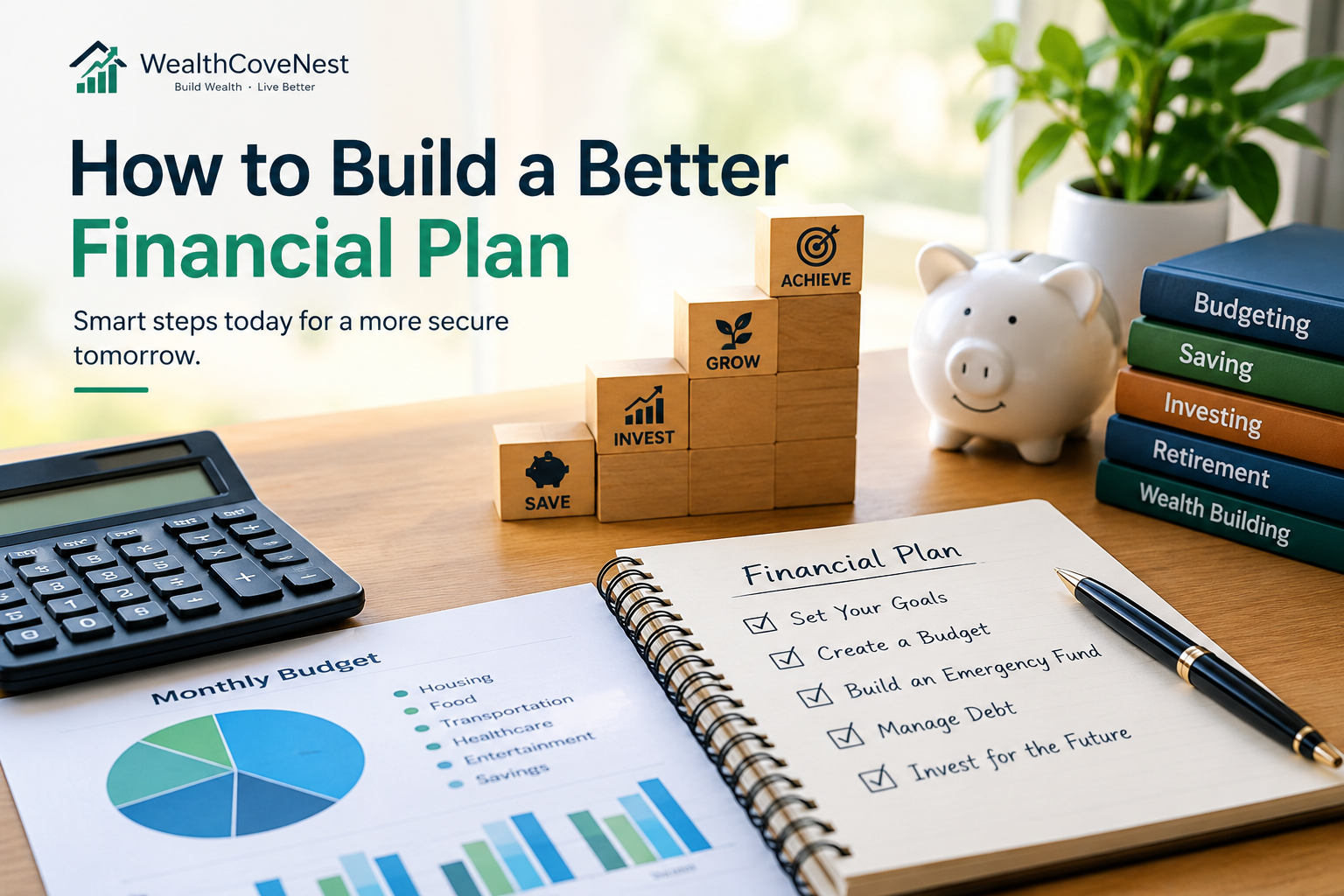
A good financial plan can help you manage your money with greater confidence and prepare for future expenses. It gives you a clearer picture of your income, spending, savings, debts and financial goals. Instead of making money decisions without a clear direction, you can follow a practical strategy that reflects your current situation and future needs.
Building a financial plan does not require a high income or complicated spreadsheets. You can start by understanding where your money goes and deciding what matters most to you. Over time you can improve your approach as your income and responsibilities change.
Whether you want to build emergency savings, pay off debt, buy a home or prepare for retirement, a financial plan can help you organize your priorities. The key is to create a realistic approach that you can follow and review regularly. Financial planning is an ongoing process rather than a one-time task.

What Is a Financial Plan?
A financial plan is a practical guide for managing your money and working toward specific goals. It brings together your income, expenses, savings, debt obligations, investments and future financial needs. It can be a simple written budget or a more detailed document that covers several years.
A useful financial plan helps you understand what you can afford today while preparing for tomorrow. For example you might need to pay monthly bills while also saving for a home deposit or retirement. Having a clear plan helps you decide how to divide your available money between these competing priorities.
Your plan should reflect your personal circumstances. Someone with a stable salary may use a monthly budget and automatic savings transfers. A freelancer with changing income may need a larger cash reserve and a flexible spending target. Neither approach is automatically better. The right choice depends on your needs and financial responsibilities.
Review Your Current Financial Situation
Before setting new goals take an honest look at your current finances. Gather information about your income, regular expenses, savings, debts and investments. Reviewing these details helps you identify your strengths and areas that need attention.
Calculate your monthly income
Include your take-home salary and other reliable sources of income. If you earn money through freelance work or a business use a reasonable estimate based on previous earnings. Avoid assuming that every month will be equally profitable.
Track your expenses
Divide your spending into essential costs and flexible expenses. Essential costs may include housing, groceries, utilities, transport and required debt payments. Flexible expenses may include entertainment, dining out and nonessential purchases.
For example if your monthly income is $3,000 and your expenses total $2,650 you have $350 remaining before any unrecorded costs. That amount could support emergency savings, debt repayment or another financial goal. A financial plan becomes more useful when you work with accurate numbers rather than guesses. Review bank statements and receipts to identify overlooked subscriptions and irregular bills.
Set Clear and Realistic Financial Goals
Your goals give direction to your financial decisions. Without clear targets you may save occasionally but struggle to decide how much to set aside or which priority comes first.
Separate your goals into three timeframes:
- Short-term goals: Cover expenses expected within the next year or two such as building an initial emergency fund or paying a small debt.
- Medium-term goals: Prepare for costs that may arise over the next few years such as education expenses or a home deposit.
- Long-term goals: Build retirement savings or prepare for other major needs that are many years away.
These timeframes are flexible guidelines rather than strict rules. The right timeframe depends on when you need the money. Make each goal specific. Instead of saying that you want to save more decide that you want to save $1,200 over the next 12 months. That target would require saving $100 each month before considering any interest earned.
A realistic financial plan should balance your goals with essential expenses and debt obligations. If the amount seems too difficult to manage reduce the target or extend the timeline rather than abandoning the goal entirely.
Create a Budget That Supports Your Goals
A budget connects your goals with your everyday spending. It shows how much money is available after essential costs and helps you decide where your remaining income should go. One popular starting point is the 50/30/20 budgeting rule. Under this approach you aim to allocate 50% of your after-tax income to needs, 30% to wants and 20% to savings and debt repayment. These percentages are guidelines rather than universal requirements. Housing costs and other living expenses may make this split unrealistic in some locations.
For example a person earning $3,000 after tax might use the following monthly budget.
| Category | Example amount |
|---|---|
| Essential needs | $1,500 |
| Wants and flexible spending | $900 |
| Savings and debt repayment | $600 |
| Total | $3,000 |
You can adjust these amounts according to your circumstances. If essential costs take up 70% of your income you might temporarily reduce discretionary spending and focus on increasing income where possible.
A practical financial plan should make room for occasional expenses such as annual insurance premiums, school costs, home repairs and travel. Setting aside a little money each month for these predictable costs can prevent them from disrupting your budget.
Build an Emergency Fund
Unexpected expenses can affect even people who manage their money carefully. A medical bill, car repair or sudden loss of income may force you to borrow money if you have no savings available. An emergency fund is money reserved for genuine unexpected expenses. Start with a manageable target based on your circumstances. You can then work toward holding several months of essential living costs if your income and budget allow it. There is no single amount that suits everyone.
If your essential monthly expenses are $2,000 then three months of those expenses would equal $6,000. You do not need to save the entire amount immediately. Saving $100 each month would build a $1,200 reserve over one year before any interest. Keep emergency savings somewhere reasonably safe and accessible. Check account fees, withdrawal rules and any applicable deposit protection.
Avoid placing money you may need immediately into investments that can fall in value. The Consumer Financial Protection Bureau recommends setting a savings target, making consistent contributions and monitoring progress. Even a small reserve can provide some protection against unexpected costs.

Manage Debt and Review Interest Costs
Debt can limit your ability to save and work toward other goals. Start by listing each debt with its outstanding balance, interest rate, minimum payment and due date.
Continue making required payments while deciding how to direct any extra money. Two common repayment methods are:
- Debt avalanche: Put extra money toward the debt with the highest interest rate first. This can reduce total interest costs when other factors are equal.
- Debt snowball: Put extra money toward the smallest balance first. Clearing a balance sooner may help you stay motivated.
Both approaches can work. The best choice depends on your interest rates, cash flow and ability to remain consistent. If you have overdue payments or serious financial difficulties contact your lender or a reputable local debt advice service to understand your options. Your financial plan should also account for the risks of borrowing more. A loan payment that looks manageable today may become difficult if your income falls or other costs rise.
Before taking on new debt compare the full borrowing cost and check whether the repayment fits your budget. Paying down expensive debt may be more beneficial than making additional investments with uncertain returns. However you should also consider urgent bills, essential cash reserves and any repayment penalties before deciding how to allocate your money.
Plan for Saving and Investing
Once you understand your cash flow and immediate priorities consider how to prepare for future goals. Saving and investing serve different purposes. Savings are generally better suited to short-term needs while investments may help support longer-term goals but involve risk.
Your financial plan should match the money you invest to the time when you expect to need it. Money intended for a near-term home purchase may need a different approach from money set aside for retirement decades away.
Understand risk and diversification
Before investing consider your time horizon, ability to absorb losses and comfort with market fluctuations. Diversification means spreading investments across different assets rather than depending entirely on one company or investment type. It can help manage some risks but cannot guarantee a profit or prevent all losses.
Compare fees, tax treatment and the rules that apply in your country. Investment products and retirement accounts vary across markets so advice intended for one country may not apply elsewhere.
Make contributions consistent
If your budget allows consider setting up automatic transfers to savings or investment accounts. Start with an amount you can afford and review it when your circumstances change.
A financial plan should not depend on optimistic assumptions about investment returns. Market performance varies and the value of investments can fall. Use cautious estimates when calculating how much you may need for future goals.
Prepare for Major Life Changes
Your needs will change over time. A new job, marriage, children, relocation or home purchase may affect your income and expenses. Reviewing these changes early can help you avoid making rushed financial decisions. For example a person planning to buy a home may need to save for a deposit, legal fees, inspections and moving expenses. Someone preparing for retirement may need to review pension benefits, healthcare costs and expected living expenses.
Your financial plan should reflect these upcoming changes. Estimate the costs involved and decide which goals need attention first. If you expect a period without regular income consider building additional savings before making major commitments.
Insurance can also play an important role in managing financial risks. Depending on your circumstances you may need health, life, disability, home or other coverage. Compare exclusions, limits, premiums and local requirements before choosing a policy.
Monitor Your Progress and Update Your Plan
Creating a financial plan is only the beginning. You also need to check whether your actions are helping you move toward your goals. Set aside time each month to compare your actual spending with your budget. Review your savings balances and debt payments. Every few months assess your progress toward larger goals and adjust your targets if necessary.
Consider reviewing your plan whenever a major event changes your circumstances. A change in income, a new dependent or an unexpected expense may require you to change your priorities. Avoid changing long-term investment decisions solely because of short-term market movements. Review whether your overall approach still matches your goals, time horizon and tolerance for risk.
A simple monthly review
Ask yourself these questions:
- Did I stay within my spending limits?
- Did I make the planned savings contributions?
- Did I pay my debts on time?
- Have my goals or financial responsibilities changed?
- What one improvement can I make next month?
A regular review keeps your financial plan practical and relevant. It also helps you identify small problems before they become more difficult to manage.
Common Financial Planning Mistakes to Avoid
Even a well-designed financial plan can become less effective if you overlook important details. Watch out for these common mistakes. Setting unrealistic targets: Trying to save too much too quickly can leave you short of money for essential bills. Choose goals that fit your actual income. Ignoring irregular expenses: Annual bills and occasional repairs can disrupt a budget when you fail to prepare for them. Estimate these costs and set money aside over time.
Forgetting inflation: Rising prices can reduce what your savings will buy in the future. Consider the possible effect of inflation when planning long-term expenses. Taking too much investment risk: Chasing high returns can expose money to losses you cannot comfortably afford. Match your investments to your goals and timeframe.
Failing to review progress: An outdated financial plan may no longer reflect your responsibilities or priorities. Review it regularly and make sensible adjustments. Comparing yourself with others: People have different incomes, family needs, debts and opportunities. Focus on making steady progress from your own starting point.

Frequently Asked Questions
Q1. What is the first step in creating a financial plan?
Start by reviewing your income, expenses, debts, savings and current financial obligations. This gives you a clear picture of your position and helps you identify the most important goals.
Q2. How often should I review my financial plan?
A monthly budget review is useful for tracking spending and savings. Review your broader goals at least once or twice a year and whenever a major life change affects your finances.
Q3. Can I build a financial plan on a low income?
Yes. Start by covering essential expenses and tracking where your money goes. Set small achievable savings targets and review expensive debts. Even limited progress can help you build better habits over time.
Q4. Should I pay off debt or save money first?
The answer depends on your circumstances. Keep up with required payments and consider building an initial emergency reserve while addressing high-interest debt. The right balance depends on your income stability and immediate needs.
Q5. Do I need a financial adviser to create a financial plan?
Not always. You can start with a budget, savings targets and a debt repayment strategy. A qualified financial adviser may be useful for complex investment decisions, taxes, retirement needs or major financial changes. Check the adviser’s credentials and fee structure before hiring them.
Final Thoughts
Building a better financial plan starts with understanding your current situation and choosing realistic goals. You do not need to solve every financial challenge at once. Begin with a clear budget, build emergency savings, manage expensive debt and prepare for future needs.
Reviewing your progress regularly will help you identify what is working and where you need to make changes. As your income, responsibilities and priorities evolve, your approach should evolve too.
The most useful financial plan is one that reflects your real life and helps you make informed decisions consistently. Start with one manageable improvement today and build from there.