Introduction
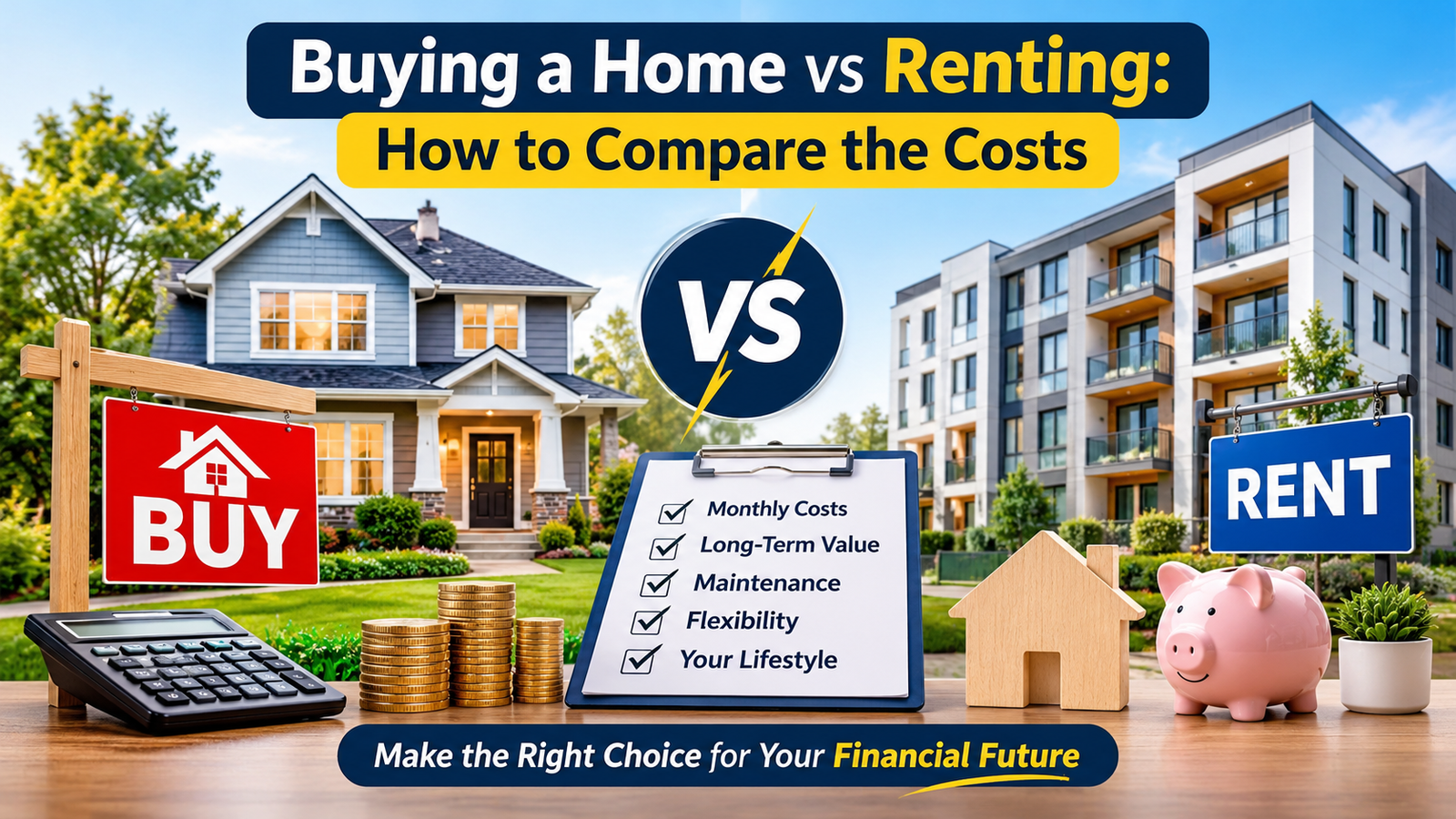
Choosing between buying a home and renting is one of the biggest financial decisions many people will make. Both options provide a place to live but the costs and responsibilities can be very different. Some people believe buying is always better because homeowners can build equity. Others prefer renting because it offers flexibility and usually requires less money upfront. The truth is that there is no single answer that works for everyone.
The right choice depends on where you live, your income, how long you plan to stay, local housing prices, mortgage costs, and your personal goals. A person who expects to move within a few years may benefit from renting, while someone planning to stay in one location for a long time may find homeownership more suitable.
This guide explains how to compare the real costs of buying a home and renting. We will look beyond the monthly payment and consider upfront expenses, maintenance, taxes, insurance, flexibility and long-term financial goals.
Buying a Home vs Renting: The Main Cost Difference
The biggest mistake people make when comparing buying and renting is looking only at the monthly mortgage payment and monthly rent. A mortgage payment does not represent the full cost of owning a home. Homeowners may also need to pay property taxes, insurance, maintenance, repairs, utilities and possibly homeowners association or service fees.
Likewise, renting can involve more than the advertised monthly rent. Renters may need to pay a security deposit, renters insurance, utilities, parking fees, application fees or other charges depending on the property and location. The Consumer Financial Protection Bureau advises prospective buyers to consider the full costs of homeownership, including taxes, insurance, utilities, maintenance and repairs rather than focusing only on the mortgage payment.
A useful comparison should therefore include three areas:
- Upfront costs
- Monthly and ongoing costs
- Long-term financial costs and benefits
Upfront Costs: Buying vs Renting
Upfront Costs of Renting
One major advantage of renting is that the initial cost is often lower than buying a home. Depending on local laws and the rental agreement, a renter may need to pay:
- A security deposit
- The first month of rent
- Sometimes the last month of rent
- Application or administrative fees
- Moving expenses
- A broker or agent fee in some markets
The exact requirements vary widely by country, city and landlord. For many people, renting makes it easier to move into a property without spending years saving a large amount of money.
Upfront Costs of Buying a Home
Buying usually requires significantly more money before you move in. Potential costs can include:
- A down payment or deposit
- Mortgage application fees
- Property inspections or surveys
- Legal or professional fees
- Closing costs
- Property taxes or transfer taxes where applicable
- Moving expenses
The specific costs depend heavily on the country and local property market. For example, official guidance in the United States and the United Kingdom highlights additional expenses such as mortgage fees, taxes, legal costs, surveys, registration fees and other transaction costs. This is why comparing the upfront costs of buying with renting is essential before making a decision.
Monthly Costs: Look Beyond Rent and Mortgage Payments
A simple rent-versus-buy comparison can be misleading if you compare only rent with the mortgage payment.
The Monthly Costs of Renting
When renting, your regular costs may include:
- Monthly rent
- Renters insurance
- Utilities not included in the lease
- Parking or building fees
- Internet and other services
The main advantage is that many maintenance costs are generally the responsibility of the landlord or property owner. However, renters may experience rent increases when a lease ends or when they move to another property. Lease terms and local regulations can affect how predictable future rental costs are.
The Monthly Costs of Homeownership
A homeowner may need to pay:
- Mortgage principal and interest
- Property taxes
- Homeowners insurance
- Mortgage insurance where applicable
- Utilities
- Homeowners association or condominium fees
- Maintenance and repairs
Official consumer guidance warns that property taxes, insurance, maintenance and other expenses can make the actual cost of owning substantially different from the mortgage payment shown by a basic calculator. This means a lower mortgage payment does not automatically make buying cheaper than renting.
A Practical Example of Comparing Costs
Imagine two similar homes in the same area.
Option A: Renting
Suppose the monthly rent is:
$1,500 per month
Additional monthly costs might include:
- Renters insurance: $25
- Utilities: $150
Estimated monthly housing-related cost:
$1,675
Option B: Buying
Suppose the mortgage payment is:
$1,400 per month
But the homeowner also pays:
- Property taxes: $250
- Homeowners insurance: $120
- Maintenance savings: $200
- Association fees: $100
Estimated monthly cost:
$2,070
In this example, renting appears cheaper on a monthly basis. However, the comparison does not end there. The homeowner may build equity through mortgage principal payments and may benefit if the property’s value rises over time. At the same time, property values can also fall. The example shows why the decision should never be based only on rent versus mortgage payments.
Maintenance and Repair Costs
Maintenance is one of the biggest differences between owning and renting.
When You Are Renting
With renting, the landlord is generally responsible for major maintenance and repairs under the terms of the lease and applicable laws. If a major system breaks, such as heating, plumbing or the roof, the property owner is generally responsible for arranging the repair.
This can make renting attractive for people who do not want unpredictable repair bills. However, renters should still read their lease carefully because responsibility for certain damage or minor maintenance can vary.
When You Own a Home
Homeowners are responsible for maintaining their property. A small problem can sometimes become an expensive repair. Examples include:
- A damaged roof
- Plumbing problems
- Heating or cooling system failures
- Electrical repairs
- Structural issues
The CFPB recommends considering the cost of maintenance and building an emergency fund for unexpected repairs. This financial responsibility is an important factor when comparing ownership with renting.
Flexibility and Moving Costs
Financial costs are important but flexibility also has value.
Why Renting Can Offer More Flexibility
Renting can be a practical choice for people who:
- Expect to move soon
- Have a temporary job assignment
- Are unsure where they want to live long term
- Want to test a new neighborhood or city
- Do not want to handle selling a property
When a lease ends, a renter may have more freedom to move than a homeowner who needs to sell a property. The CFPB notes that buying and selling involve transaction costs and that purchasing may be less suitable for people who expect to move again within the next few years.
Why Buying Can Reduce Flexibility
A homeowner may need to sell the property before relocating.
Selling can involve:
- Real estate agent costs
- Legal or professional fees
- Taxes depending on the location
- Repairs and preparation costs
- Market risk
If property prices decline, selling may be especially difficult or financially disappointing. For this reason, renting may be a better fit for people whose future location is uncertain.
Building Equity Through Homeownership
One important advantage of buying is the opportunity to build equity. Equity generally represents the difference between the value of your home and the amount you still owe on the mortgage.
For example:
Home value: $400,000
Mortgage balance: $250,000
Estimated equity:
$150,000
Equity can increase when you reduce your mortgage balance. It may also increase if the property’s market value rises. However, home values are not guaranteed to increase. Housing markets can decline and transaction costs can reduce the financial benefit when selling. Therefore, buying should not be viewed as a guaranteed investment.
While renting does not usually build equity in the property you live in, renters may have greater flexibility to use money for other financial goals, such as emergency savings, retirement accounts or other investments. The best choice depends on how the numbers and your personal goals work together.

The Opportunity Cost of Your Down Payment
When you buy a home, a significant amount of money may be tied up in the property through the down payment and other upfront costs. That money could potentially have been used for:
- Emergency savings
- Retirement investing
- Other investments
- Education
- Starting a business
- Other personal goals
This is known as opportunity cost. This does not mean buying is automatically a poor decision. It simply means that the money used to purchase a home has alternative uses. Someone who chooses renting may be able to keep more cash available for other goals. However, a renter must also consider future rent increases and the fact that they are not building ownership in the property.
How Long Do You Plan to Stay?
The amount of time you expect to stay in a property can significantly affect the financial comparison. Buying involves upfront costs and potential selling costs. These expenses may take time to offset through equity growth or other financial benefits. If you plan to move in one or two years, renting may offer lower financial risk and greater flexibility.
If you expect to remain in one location for many years, buying may become more attractive depending on property prices, mortgage costs, taxes, maintenance and local rental prices. The CFPB recommends considering how long you expect to stay and testing different scenarios when using rent-versus-buy calculators because future assumptions can strongly affect the result.
Buying vs Renting: Benefits and Risks
Benefits of Buying
Buying a home can provide:
- Potential equity growth
- Greater control over your property
- Long-term housing stability
- The ability to personalize your home
- Potential financial benefits depending on local tax rules
Risks of Buying
Buying also involves:
- Large upfront costs
- Maintenance responsibilities
- Property market risk
- Less flexibility
- Unexpected repair costs
- Ongoing taxes and insurance
Benefits of Renting
Renting can provide:
- Greater flexibility
- Lower upfront costs in many cases
- Fewer maintenance responsibilities
- Easier relocation
- Less exposure to property price changes
Risks of Renting
The disadvantages of renting can include:
- Possible rent increases
- Less control over the property
- Limited ability to customize your home
- No ownership equity in the property
- The possibility of needing to move when a lease ends
Neither option is universally better.
How to Compare Buying and Renting in Your Area
Use this simple process before making your decision.
Step 1: Compare Similar Properties
Do not compare a small rental apartment with a large house. Compare properties that are similar in:
- Location
- Size
- Condition
- Features
Step 2: Calculate the Full Monthly Cost
For renting, include rent, insurance, utilities and regular fees. For buying, include the mortgage, taxes, insurance, association fees, utilities and estimated maintenance.
Step 3: Calculate Upfront Costs
Compare the money required to:
- Start a rental agreement
- Buy and close on a property
Step 4: Consider Your Time Horizon
Ask yourself:
How long am I realistically likely to stay here?
Your answer can significantly change whether buying or renting makes more financial sense.
Step 5: Protect Your Emergency Fund
Do not use every available dollar for a down payment or housing costs. Whether buying or renting, maintaining emergency savings can help you manage unexpected expenses.
Step 6: Consider Your Personal Goals
Your decision should also reflect your lifestyle. Someone who values flexibility may prefer renting even when buying appears affordable. Someone planning to settle in one area for many years may value the stability and control of homeownership.
Common Mistakes to Avoid
Comparing Only the Mortgage and Rent
This is one of the most common mistakes. Always include taxes, insurance, maintenance, fees and other expenses.
Forgetting About Upfront Costs
Buying requires more than a down payment. Legal fees, taxes, inspections, surveys and closing costs may apply.
Assuming Home Prices Always Rise
Property values can increase or decrease. Buying a home involves market risk.
Buying Without Emergency Savings
Home repairs can be expensive. Using all your savings for the purchase can leave you financially vulnerable.
Assuming Renting Is Always Throwing Money Away
Renting provides a service: housing. It can offer flexibility and reduce exposure to certain maintenance and property market risks.
Ignoring Your Future Plans
A home may not be a good financial fit if you expect to move soon.
Is Buying or Renting Better for You?
The best choice depends on your circumstances.
Renting may be a better option if you:
- Expect to move soon
- Need flexibility
- Do not have sufficient savings for buying costs
- Prefer not to manage repairs
- Are still deciding where you want to live
Buying may be worth considering if you:
- Plan to stay for a longer period
- Have stable income
- Can afford the full cost of ownership
- Have emergency savings
- Are comfortable with maintenance responsibilities
A housing decision should not be based only on If buying or renting is considered more prestigious or financially popular. The better option is the one that fits your budget, lifestyle, goals and local housing market.

Frequently Asked Questions
Q1. Is buying always cheaper than renting?
No. The answer depends on local property prices, rent levels, mortgage costs, taxes, insurance, maintenance expenses and how long you plan to stay.
Q2. Is renting a waste of money?
No. Renting provides housing and can offer flexibility, lower upfront costs and fewer maintenance responsibilities.
Q3. How much money should I save before buying a home?
The amount depends on your local market, down payment requirements, taxes, fees and emergency savings needs. Research the full cost before making a purchase.
Q4. How long should I stay in a home after buying?
There is no universal number of years. Your break-even point depends on buying costs, selling costs, mortgage expenses, property values and local market conditions.
Q5. What costs should I include when comparing buying and renting?
Include upfront costs, monthly payments, insurance, taxes, utilities, maintenance, fees and potential moving or selling costs.
Conclusion
Buying a home and renting both have financial benefits and risks. Buying may provide stability, control and the opportunity to build equity over time. However, it also comes with significant upfront costs, maintenance responsibilities and property market risk.
Renting can offer flexibility, lower initial costs and freedom from many major repair responsibilities. However, renters may face rising housing costs and do not build ownership equity in the property they occupy. The smartest approach is to compare the complete costs rather than focusing only on rent or a mortgage payment. Consider your expected length of stay, financial stability, savings, local housing market and personal goals.
There is no universal winner in the buying versus renting debate. The right choice is the one that gives you a sustainable housing situation without putting unnecessary pressure on your overall financial life.
2 thoughts on “Buying a Home vs Renting: How to Compare the Costs”