Introduction
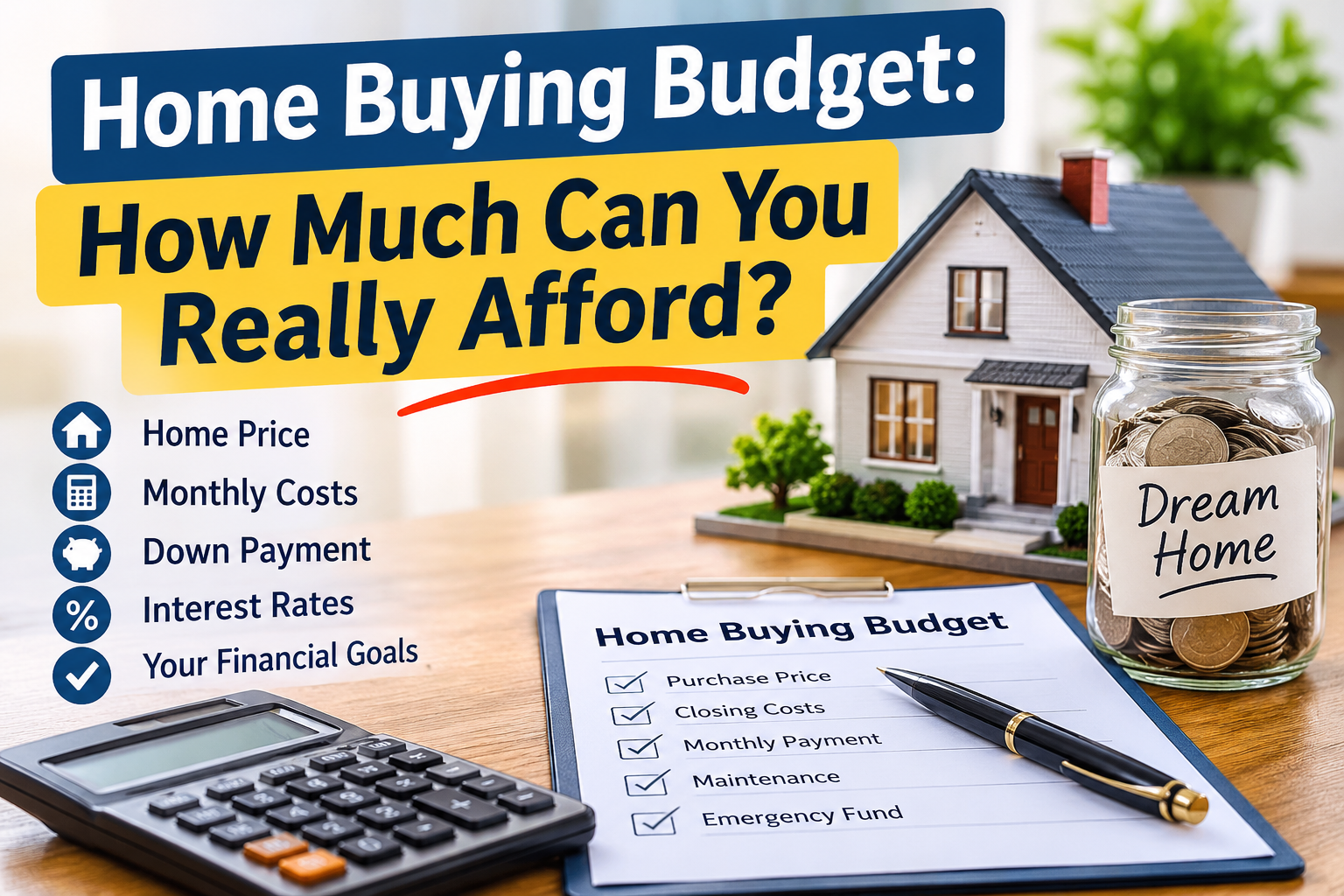
Buying a home is exciting, but it can also be one of the biggest financial decisions you will ever make. Before you start comparing properties or applying for a mortgage, you need a realistic Buying Budget. Many people begin by asking, “How much can I borrow?” A better question is, “How much can I comfortably afford?”
The amount a lender is willing to approve is not always the amount that will fit comfortably into your everyday life. A realistic Buying Budget should consider your income, existing debts, savings, down payment, mortgage costs, taxes, insurance, maintenance and other financial goals.
The costs of homeownership can also vary significantly between countries, cities, and individual properties. For that reason, there is no single home price that works for everyone. This guide explains how to create a practical Buying Budget and estimate how much home you can reasonably afford without stretching your finances too far.

What Is a Buying Budget?
A Buying Budget is a financial plan that helps you estimate how much you can comfortably spend when purchasing a home. It should include more than the property’s purchase price. A complete Buying Budget considers both upfront costs and ongoing expenses.
Your budget may include:
- Your down payment
- Mortgage principal and interest
- Property taxes where applicable
- Homeowners or property insurance
- Mortgage insurance where required
- Closing costs and legal fees
- Homeowners association or service fees where applicable
- Utilities
- Maintenance and repairs
- Moving and furnishing costs
The goal is not simply to find the most expensive property you can qualify for. The goal is to create a Buying Budget that allows you to own a home while still managing your other financial responsibilities.
Start With Your Monthly Income and Expenses
The first step in creating a Buying Budget is understanding your current financial situation. Start by reviewing your regular monthly income. Then calculate your essential and discretionary expenses.
Your monthly expenses might include:
- Food
- Transportation
- Insurance
- Credit card payments
- Student or education loans
- Personal loans
- Childcare
- Healthcare
- Subscriptions
- Family responsibilities
Look at several months of bank and card statements rather than estimating from memory. This can provide a more realistic picture of your spending. The Consumer Financial Protection Bureau recommends reviewing spending carefully before home shopping because new homeowners often face expenses that were not part of their previous housing situation.
After reviewing your income and spending, ask yourself how much money you can realistically dedicate to housing each month. That number should become the foundation of your Buying Budget.
How Much of Your Income Should Go Toward Housing?
You may see different affordability rules when researching homeownership. Some lenders and financial organizations use guidelines based on a percentage of gross monthly income. For example, Freddie Mac notes that many lenders suggest spending no more than around 30% of gross monthly income on the mortgage payment, including principal, interest, taxes and insurance. However, this is only a general guideline rather than a universal rule.
Your personal situation matters more than a simple percentage. A household with no debt may be comfortable spending a larger portion of income on housing than a household with significant loan payments or family expenses. For example, consider two households earning the same amount.
Household A has:
- No car loan
- No major credit card debt
- Strong savings
Household B has:
- A car payment
- Student loan payments
- Credit card balances
- Higher childcare costs
Even with identical incomes, their realistic Buying Budget could be very different. Use percentage guidelines as a starting point, but build your final decision around your actual expenses and financial goals.
Calculate the Total Monthly Cost of Homeownership
One of the most common mistakes is focusing only on the mortgage payment. Your Buying Budget should consider the total monthly cost of owning the property. Depending on where you live, this may include:
Mortgage Principal and Interest
The principal is the amount borrowed, while interest is the cost charged by the lender for borrowing the money. Your interest rate and loan term can significantly affect the monthly payment.
Property Taxes
Property taxes may be included in your monthly housing payment or paid separately depending on your location and financing arrangement. These costs can change over time.
Homeowners Insurance
Lenders commonly require insurance when a property is financed with a mortgage. Insurance costs depend on factors such as location, property type, replacement costs, and local risks.
Mortgage Insurance
In some markets and loan programs, a smaller down payment may result in additional mortgage insurance costs. For example, the CFPB notes that putting less than 20% down may require mortgage insurance depending on the loan.
Homeowners Association or Service Fees
Some apartments, condominiums, and planned communities have regular association or service charges. Always check these costs before adding a property to your Buying Budget.
Utilities
A larger home may have higher electricity, heating, cooling, water and internet costs.
Maintenance and Repairs
Every property requires ongoing care. A realistic Buying Budget should leave room for routine maintenance and unexpected repairs.
How Your Down Payment Affects Your Buying Budget
Your down payment is the amount you pay upfront toward the purchase price. A larger down payment generally reduces the amount you need to borrow. This may lower your monthly mortgage payment and reduce the total interest paid over the life of the loan. However, using all your available savings for a down payment can create another problem. Imagine that you have saved $60,000. You could potentially use the entire amount toward the home purchase but doing so might leave you with little money for:
- Closing costs
- Moving expenses
- Furniture
- Repairs
- Emergencies
The CFPB advises buyers to consider their available savings alongside closing costs, moving costs, renovations, furnishings, and an emergency cushion. Your Buying Budget should balance the benefits of a larger down payment with the importance of maintaining financial reserves.
Do Not Forget Closing Costs
Many first-time buyers focus heavily on saving for a down payment and forget about the costs involved in completing the transaction.
Closing costs can include expenses such as:
- Loan fees
- Property valuation or appraisal costs
- Legal or professional fees
- Title or registration costs where applicable
- Taxes and government charges
- Insurance-related costs
These expenses vary significantly by country, city, loan type and transaction. In the United States, the CFPB states that closing costs typically range from approximately 2% to 5% of the home purchase price, although actual costs vary. If you are buying outside the United States, research the rules and transaction costs in your local market. A strong Buying Budget always includes a separate estimate for these upfront expenses.
Practical Buying Budget Example
Let’s look at a simplified example. Suppose a household has:
Monthly take-home income: $6,000
After reviewing regular expenses, they determine that they can comfortably allocate approximately $1,800 toward total housing costs. Their Buying Budget should not assume that the entire $1,800 will go toward principal and interest.
Instead, they may need to account for:
| Monthly Cost | Example Amount |
|---|---|
| Mortgage principal and interest | $1,350 |
| Property taxes | $200 |
| Homeowners insurance | $100 |
| Mortgage or property-related fees | $100 |
| Estimated maintenance reserve | $50 |
| Total | $1,800 |
This example is for illustration only. Actual costs can be much higher or lower depending on location and property type. The important lesson is that a Buying Budget should focus on the total cost of ownership rather than just the mortgage payment.
Check Your Existing Debt Before Buying
Your current debt can have a major impact on affordability. Mortgage lenders often consider your debt-to-income ratio, which compares certain monthly debt obligations with your income.
Existing obligations may include:
- Car loans
- Student loans
- Credit card payments
- Personal loans
- Other recurring debt
The more money you already commit to debt payments, the less flexibility you may have for housing costs. Your Buying Budget should also consider debts that lenders may not fully capture. For example, regular family support, medical expenses or future education costs may still affect your ability to make monthly payments. Before buying, consider whether reducing expensive debt could improve your financial position.
Understand the Difference Between Preapproval and Affordability
Mortgage preapproval can be useful because it gives you an estimate of how much financing you may qualify for. However, qualification does not automatically mean comfort. A lender may approve a larger amount than you personally want to spend. This is why your Buying Budget should come before your property search.
Think about these two questions:
How much can I borrow?
and
How much can I comfortably repay while maintaining my lifestyle and financial goals?
The second question is usually more important for long-term financial stability. Bank of America similarly advises buyers to focus on how much they should borrow rather than simply the maximum amount they could borrow.
Consider How Interest Rates Change Affordability
Mortgage interest rates can significantly affect how much home fits within your Buying Budget. Even if the property price stays the same, a higher interest rate can increase your monthly payment. That means a home that looked affordable at one interest rate may no longer fit your budget at another rate. When planning your purchase, try different scenarios.
For example, estimate your payments using:
- A lower interest rate
- Your expected interest rate
- A slightly higher interest rate
This can help you understand how changes in borrowing costs could affect your monthly finances. The CFPB identifies the interest rate and loan terms as important factors in determining the home price a buyer can afford.
Keep an Emergency Fund After Buying
Buying a home should not leave you completely without savings. Unexpected expenses can happen at any time.
You might face:
- A major repair
- A temporary loss of income
- A medical expense
- Damage caused by weather
- Higher utility or insurance costs
A financial emergency can be much more difficult to manage if every available dollar is already committed to your home. When building your Buying Budget, protect some of your savings rather than automatically putting every dollar into the purchase. The appropriate emergency fund depends on your household circumstances, job stability, income sources and financial responsibilities.
Think About Future Expenses
A home purchase should fit not only your current finances but also your likely future plans. Before finalizing your Buying Budget, think about possible changes such as:
- Starting or expanding a family
- Changing jobs
- Returning to education
- Buying a vehicle
- Supporting relatives
- Planning for retirement
- Moving to a different location
You cannot predict everything, but considering major possibilities can help you avoid building a budget that only works under perfect conditions. A slightly less expensive home may provide more financial flexibility for other important goals.
Benefits of Creating a Realistic Buying Budget
A thoughtful Buying Budget can provide several benefits.
It Reduces Financial Stress
Knowing your comfortable spending limit can prevent you from stretching your finances too far.
It Helps You Compare Properties
When you know your maximum total housing cost, it becomes easier to compare homes with different taxes, fees, and maintenance requirements.
It Protects Other Financial Goals
A realistic budget can leave room for savings, retirement planning, travel, education and emergencies.
It Helps You Avoid Emotional Decisions
Home shopping can become emotional. A clear Buying Budget gives you a financial boundary before you fall in love with a property.
Common Buying Budget Mistakes to Avoid
Focusing Only on the Purchase Price
The property price is important but monthly ownership costs matter just as much.
Using Every Dollar for the Down Payment
Keeping some money available for emergencies and unexpected costs can be important.
Ignoring Maintenance
Homes require regular maintenance even when there are no major problems.
Forgetting Future Cost Increases
Taxes, insurance, utilities and other expenses may change over time.
Buying at Your Absolute Maximum
Just because a lender approves a certain amount does not mean borrowing the maximum is the right decision.
Ignoring Location-Specific Costs
Property taxes, insurance, fees and transaction costs can vary dramatically between markets.
How to Build Your Buying Budget Step by Step
Here is a simple process you can follow.
Step 1: Calculate your reliable monthly income.
Use a realistic income figure, especially if your earnings vary.
Step 2: Review several months of expenses.
Look at actual statements rather than relying only on estimates.
Step 3: List your current debts.
Include all regular loan and credit obligations.
Step 4: Set a comfortable monthly housing limit.
Remember to include all ownership costs.
Step 5: Calculate your available upfront savings.
Do not forget to protect an emergency reserve.
Step 6: Estimate your down payment and closing costs.
Research the rules and costs in your local market.
Step 7: Compare different mortgage scenarios.
Test different interest rates, loan terms, and down payment amounts.
Step 8: Leave a financial cushion.
A good Buying Budget should allow for unexpected expenses and future financial goals.

Frequently Asked Questions
Q1. How do I calculate my Buying Budget?
Start by reviewing your monthly income, expenses, debts, savings and expected homeownership costs. Then estimate a monthly housing payment that you can comfortably manage.
Q2. Should I buy the most expensive home a lender approves?
Not necessarily. The amount you qualify to borrow may be higher than the amount that comfortably fits your personal financial situation.
Q3. Does my Buying Budget include maintenance costs?
Yes. A realistic homeownership budget should include money for routine maintenance and unexpected repairs.
Q4. How much should I save before buying a home?
You may need money for a down payment, closing costs, moving expenses, initial repairs, and an emergency reserve. The exact amount depends on your location and financing options.
Q5. Why can two people with the same income afford different homes?
Their debts, savings, credit profiles, family responsibilities, expenses, interest rates and local housing costs may be different.
Conclusion
Creating a realistic Buying Budget is one of the most important steps before purchasing a home. The right budget is not based only on the maximum amount a lender will approve. It should reflect your income, existing debt, savings, down payment, total monthly housing costs, and future financial goals. Take time to calculate the full cost of homeownership before making an offer. Include taxes, insurance, maintenance, utilities, fees and closing costs where applicable.
Most importantly, leave yourself some financial breathing room. A home should support your life rather than consume your entire budget. With a realistic Buying Budget, careful research and professional guidance when needed, you can make a more informed decision about how much home you can truly afford.
2 thoughts on “Home Buying Budget: How Much Can You Really Afford?”