Introduction
Buying a Home for the first time can feel exciting, stressful and confusing at the same time. For many people, it is one of the biggest financial decisions they will ever make. There are homes to compare, budgets to calculate, loans to understand, documents to review, and many decisions to make before receiving the keys.
The good news is that Buying a Home does not have to feel overwhelming when you break the process into smaller steps. Good preparation can help you understand what you can afford, identify the right property, and avoid rushing into a decision that could create financial pressure later.
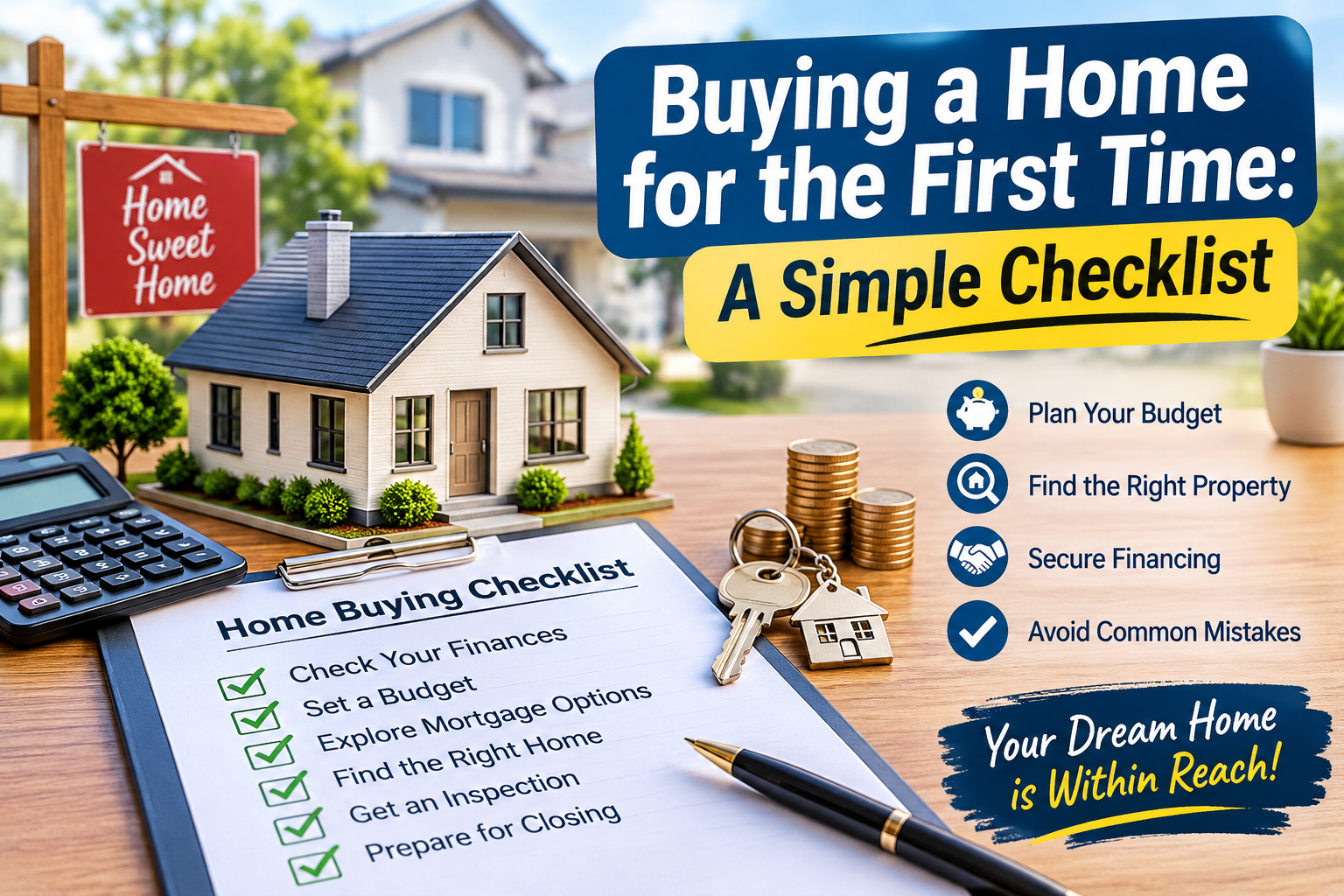
This simple checklist covers the major steps involved in Buying a Home, from checking your finances and saving money to making an offer and preparing for closing. The exact process varies between countries and local markets, but the basic principles can help first-time buyers almost anywhere.

Quick Checklist Before Buying a Home
Before you begin seriously searching for properties, make sure you can answer these questions:
- Do you have a stable and realistic source of income?
- Have you reviewed your budget and existing debts?
- Do you understand the full cost of homeownership?
- Have you saved money for a down payment or local equivalent?
- Have you considered closing costs, taxes, insurance, and repairs?
- Have you checked your credit or financial profile where relevant?
- Do you know what features you need in a property?
- Have you compared financing options?
- Are you prepared to arrange an inspection and review legal documents?
Official homebuyer guidance from organizations such as the Consumer Financial Protection Bureau recommends preparing your finances, reviewing affordability, checking credit, and planning for costs beyond the mortgage payment.
Decide Whether Buying a Home Is Right for You
The first step in Buying a Home is deciding whether homeownership makes sense for your current situation. Owning a property can provide stability and may allow you to build equity over time. However, it also comes with responsibilities that renters may not have. Repairs, maintenance, property taxes, insurance, service charges and other costs can all become part of your budget.
Before Buying a Home, think about your future plans. Do you expect to stay in the area for several years? Is your income reasonably stable? Are you prepared to handle unexpected repair costs? There is no universal answer to whether renting or owning is better. The right choice depends on your finances, lifestyle, local property market, and future plans.
Benefits of Homeownership
Homeownership may offer benefits such as:
- Greater control over your living space
- Potential long-term equity building
- More stability for people planning to stay in one location
- The ability to make improvements subject to local rules
Potential Risks
At the same time, Buying a Home can involve:
- Large upfront costs
- Long-term debt obligations
- Maintenance and repair expenses
- Property market fluctuations
- Reduced flexibility if you need to move quickly
Looking at both the benefits and risks can help you make a more balanced decision.
Review Your Financial Situation
Before Buying a Home, take an honest look at your finances. Start by reviewing your monthly income and regular expenses. Include debt payments, transportation, food, insurance, savings and other essential costs. This gives you a clearer picture of how much money may realistically be available for housing.
A common mistake is focusing only on the maximum amount a lender may be willing to provide. A loan approval amount does not automatically mean a payment will be comfortable for your personal budget.
Create a Simple Home Budget
For example, imagine your household has a monthly income of $5,000 after essential deductions. Before committing to a property, consider your existing monthly obligations and estimate the full housing cost.
Your housing budget may include:
- Mortgage or loan payment
- Property taxes where applicable
- Homeowners insurance
- Service or association fees
- Utilities
- Maintenance savings
When Buying a Home, leave room in your budget for unexpected expenses rather than spending every available dollar on the property.
Check Your Credit and Financial Profile
In many countries, lenders consider your credit history, income, existing debts, and other financial information when reviewing a mortgage application. Checking your credit information early can give you time to identify possible errors and understand areas that may need improvement. The CFPB also recommends reviewing your credit reports and financial situation before shopping seriously for a mortgage.
The exact credit requirements vary by lender, loan type, and country. Avoid assuming that one credit score automatically determines whether Buying a Home is possible.
If your financial profile needs improvement, you may decide to:
- Pay bills on time
- Reduce unnecessary debt where practical
- Avoid taking on major new credit before applying
- Review your financial records for errors
- Build additional savings
Save for More Than the Down Payment
One of the biggest financial steps in Buying a Home is preparing for upfront costs. Many buyers focus entirely on the down payment. However, purchasing a property can involve other expenses before and after the transaction is complete.
Depending on your location, these costs may include:
- Loan or mortgage fees
- Legal or professional fees
- Property valuation or appraisal costs
- Inspection costs
- Insurance
- Taxes and government charges
- Moving expenses
- Initial repairs or furniture
For example, a buyer may have enough money for the initial down payment but still struggle with closing and moving costs. The amount required for a down payment depends heavily on local lending rules and available loan programs.
Some buyers may qualify for lower down payment options, while others may choose to contribute more to reduce the amount borrowed. In the United States, the CFPB notes that the required amount can vary by loan program and that a larger down payment is not the only possible route to homeownership.
Set a Realistic Property Budget
Once you understand your finances, set a realistic price range before Buying a Home. Your budget should be based on what you can comfortably afford rather than simply the highest amount available through financing.
When calculating affordability, consider:
Monthly Housing Costs
Estimate your expected payment and include other regular property expenses.
Existing Debt
Car loans, student loans, credit card balances and other obligations can affect your available budget.
Emergency Savings
Do not assume every spare amount should go toward the property purchase.
Future Expenses
Your financial situation may change. Consider possible increases in expenses and the cost of maintaining your new property.
Government and consumer homebuyer resources consistently emphasize affordability, income, existing expenses, financing and interest costs as important parts of the preparation process.
Explore Mortgage and Financing Options
Financing is an important part of Buying a Home and it is worth taking time to compare your options.
Different lenders and loan products can have different:
- Interest rates
- Fees
- Repayment periods
- Down payment requirements
- Eligibility requirements
- Fixed or variable interest structures
Do not automatically choose the first financing offer you receive.
Compare the Total Cost
A lower monthly payment may sometimes mean a longer repayment period. A low introductory rate may also change later depending on the loan structure.
When comparing offers, ask for clear information about:
- Interest rate
- Annual or overall borrowing costs
- Fees
- Monthly payment
- Loan term
- Conditions that could change the payment
The CFPB recommends comparing loan offers and carefully reviewing mortgage documents before making a final decision.
Get Pre-Approved or Understand Your Financing Position
Depending on your local market, getting pre-approved or receiving an initial financing assessment may help you understand your likely borrowing range. However, remember that a preliminary approval is not always a final guarantee. Lenders may still need to review additional documents, the property, and other conditions before completing the loan.
When Buying a Home, keep your financial situation stable during the process where possible. Major new debts or significant financial changes could affect your application.
Prepare documents such as:
- Proof of income
- Identification
- Bank statements
- Tax or financial records where required
- Information about existing debts
Requirements vary between countries and lenders.
Create a List of Needs and Wants
Before you begin visiting properties, create two lists.
Your Must-Haves
These are features you genuinely need, such as:
- Suitable location
- Enough bedrooms
- Reasonable commuting distance
- Accessibility requirements
- A property within your budget
Your Nice-to-Haves
These may include:
- A larger garden
- A garage
- A modern kitchen
- Extra storage
- A specific view
Separating needs from wants can make Buying a Home easier because it prevents you from becoming distracted by attractive features that do not match your essential requirements. Official homebuyer checklists also recommend comparing your needs and wants when evaluating properties.
Research the Location Carefully
The property itself is important, but location can be equally important when Buying a Home.
Research the surrounding area and consider:
- Travel and transportation
- Schools and local services
- Shopping and healthcare
- Noise levels
- Flood or environmental risks
- Future development
- Local property rules
Visit the area at different times when possible. A quiet street during the afternoon may feel completely different during rush hour or on weekends. Do not make a decision based only on photographs or a single property visit.
Inspect the Property Carefully
A property may look attractive but still have expensive hidden problems. This is why inspections are an important part of Buying a Home.
An independent home inspection can help identify issues involving areas such as:
- Roofing
- Plumbing
- Electrical systems
- Heating and cooling
- Structural components
- Moisture or drainage
- Major appliances
A home inspection is generally different from a lender’s property appraisal. An appraisal is primarily related to the property’s estimated value for lending purposes, while an inspection focuses on the physical condition of the property.
If possible, attend the inspection and ask questions. Depending on the contract and local rules, inspection findings may create an opportunity to negotiate repairs, request a price adjustment, or reconsider the purchase.
Make a Careful and Realistic Offer
Once you find a suitable property, Buying a Home moves into the offer stage. Your offer should be based on research rather than emotion alone. Consider the local market, the condition of the property, comparable properties, and your available budget. Do not stretch your finances simply because you are worried about losing a particular home.
Depending on local rules and your purchase agreement, an offer may include conditions related to:
- Financing
- Inspection
- Property valuation
- Legal review
A qualified local real estate professional or legal adviser can explain the rules that apply in your area.
Prepare for Closing and Ownership
After your offer is accepted, the process is not necessarily finished.
You may need to:
- Provide additional documents to the lender
- Finalize financing
- Arrange insurance
- Complete inspections
- Review legal paperwork
- Prepare funds for closing
- Confirm the property condition before completion
The CFPB advises buyers to review closing documents carefully because signing the final documents creates responsibility for the mortgage loan. Be cautious about last-minute fraud and payment scams. Always independently verify payment instructions using trusted contact information rather than relying only on an unexpected email or message.
Common Mistakes to Avoid When Buying a Home
Buying More Than You Can Comfortably Afford
A lender’s approval amount is not necessarily the right budget for your lifestyle.
Forgetting Additional Costs
Repairs, taxes, insurance, fees, and maintenance can significantly affect your total cost.
Skipping Important Inspections
Trying to save money by avoiding inspections may expose you to larger repair expenses later.
Choosing Financing Too Quickly
Compare available options and understand the full terms before signing.
Making Emotional Decisions
A beautiful property can create excitement, but your budget and long-term needs should still guide your decision.
Ignoring the Location
You can renovate many parts of a house, but changing the surrounding location is much harder.
A Simple First-Time Homebuyer Checklist
Use this checklist before completing your purchase:
Financial Preparation
- Review income and expenses
- Check your credit or financial profile
- Reduce unnecessary debt where possible
- Build an emergency fund
- Save for upfront costs
Property Search
- Set a realistic budget
- Create a needs and wants list
- Research neighborhoods
- Visit multiple properties
- Compare similar homes
Financing
- Research available financing options
- Compare lenders and loan terms
- Understand interest rates and fees
- Prepare required documents
Before Closing
- Arrange an independent inspection
- Review the property appraisal if required
- Understand insurance requirements
- Read contracts carefully
- Review final costs and documents

Frequently Asked Questions
Q1. How much money should I save before buying a home?
The amount depends on your property price, location, financing option, and local transaction costs. Plan for the down payment or required initial contribution plus closing costs, moving expenses, and an emergency reserve.
2. Should I pay off all my debt before buying a home?
Not necessarily. However, existing debt can affect affordability and loan eligibility. Review your overall financial situation and avoid taking on a mortgage payment that creates excessive financial pressure.
Q3. Is a home inspection really necessary?
A professional inspection can help identify important problems that may not be obvious during a normal viewing. Inspection rules and practices vary by location but skipping this step can increase your risk of unexpected repair costs.
Q4. How do I know whether I can afford a house?
Review your income, regular expenses, existing debt, expected housing costs, and emergency savings. Consider the full cost of ownership rather than only the mortgage payment.
Q5. How long does buying a home take?
The timeline varies depending on the country, financing, property chain, legal requirements, inspections, and other factors. Some purchases move quickly while others take several months.
Conclusion
Buying a Home for the first time is a major financial and personal decision but careful preparation can make the process more manageable. Start by reviewing your finances, setting a realistic budget, understanding the full costs, and researching your financing options.
As you move forward with Buying a Home, take time to compare properties, investigate locations, arrange appropriate inspections, and read important documents carefully. Avoid rushing because of pressure, excitement, or fear of missing out.
The best first home is not necessarily the largest or most expensive property you can buy. It is a property that fits your needs and remains financially manageable over the long term.
1 thought on “Buying a Home for the First Time: A Simple Checklist”