Introduction
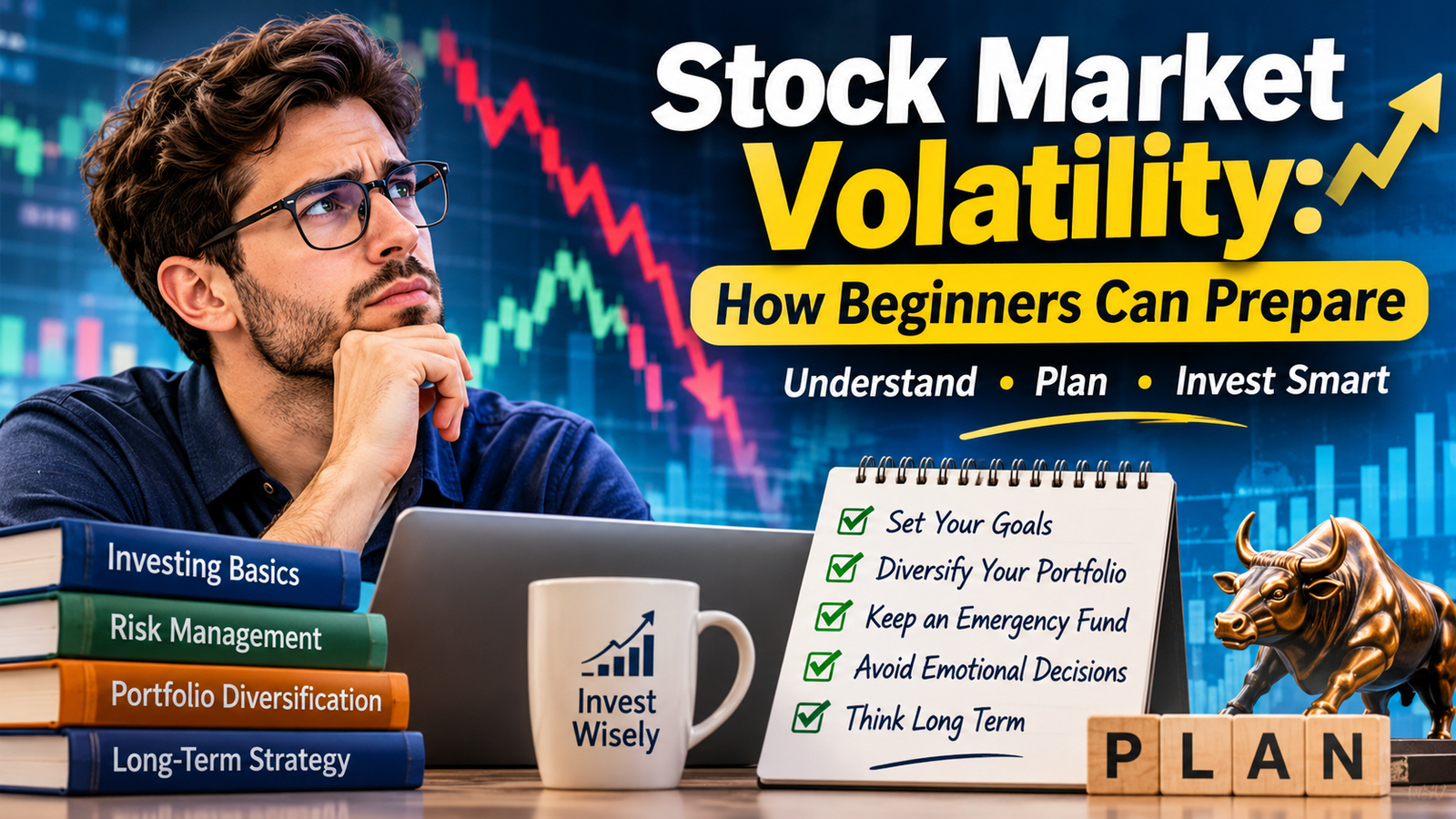
The stock market does not always move in a straight line. Prices rise when investors feel confident and fall when economic conditions or market expectations change. These movements are a normal part of investing. However, they can create uncertainty for beginners who are still learning how financial markets work. Understanding Market Volatility can help new investors make more informed decisions and avoid reacting emotionally to every price change.
Market Volatility refers to how frequently and significantly the prices of stocks and other financial assets move over a particular period. Some market movements are small and happen gradually. Others are sudden and much larger. Economic reports, interest rate decisions, company earnings, geopolitical events and changes in investor confidence can all influence these movements.
For beginners, learning about Market Volatility is an important step toward building a sensible investment strategy. Instead of trying to predict every market movement, investors can learn how to manage risk, diversify their portfolios and maintain a long-term perspective. This guide explains why stock prices fluctuate and how you can prepare for uncertain market conditions.

What Is Market Volatility?
Market Volatility describes the degree to which stock prices fluctuate over time. It helps investors understand how much prices change and how quickly those changes happen. A stock market with relatively small price movements is generally considered less volatile than one experiencing frequent and significant changes.
For example, imagine that a company’s stock trades at $100 per share. If its price moves between $98 and $102 over several weeks, the changes are relatively limited. However, if the same stock moves between $85 and $115 within a short period, it demonstrates much larger price fluctuations.
Market Volatility does not automatically mean that the market is performing poorly. Prices can move sharply in either direction. Strong company earnings or positive economic news may cause stock prices to rise quickly. Unexpected economic problems or disappointing financial results may push prices lower. It is also important to understand that volatility and investment risk are related but different concepts. Volatility measures price fluctuations, while investment risk includes the possibility of losing money or failing to achieve financial goals.
What Causes Market Volatility?
Several factors can influence stock prices. Understanding these factors can help beginners recognize why financial markets sometimes become unpredictable.
Economic News and Financial Reports
Economic information can change how investors view the future. Reports about inflation, employment, economic growth and consumer spending may influence expectations about businesses and financial markets.
For example, higher-than-expected inflation may create concerns about future interest rate increases. Investors might become more cautious because higher borrowing costs can affect company profits and consumer spending. Market Volatility can increase when economic reports differ significantly from expectations. Investors often adjust their portfolios as they respond to new information.
Interest Rate Changes
Central banks influence financial conditions through monetary policy. When interest rates increase, borrowing can become more expensive for households and businesses. This may affect company expansion plans, consumer spending and investment decisions.
Higher interest rates can also make certain savings products and bonds more attractive compared with stocks. As investors reconsider their choices, stock prices may experience additional fluctuations. However, the relationship between interest rates and stock prices is not always straightforward. Market expectations, economic conditions and company performance also matter.
Company Earnings and Business Performance
A company’s financial performance can influence its share price. Investors regularly examine revenue, profits, operating costs and future business expectations. If a company reports stronger earnings than expected, its stock price may increase.
However, disappointing results or weaker future guidance may lead to falling prices. Market Volatility can become more noticeable during earnings seasons because many publicly traded companies release financial results around the same time.
Global Events and Investor Confidence
International conflicts, political developments, trade restrictions, natural disasters and major economic disruptions can influence financial markets.These events sometimes create uncertainty about future business conditions. Investors may respond by reducing exposure to certain stocks or moving money toward assets they consider more defensive.
Changes in investor confidence can also contribute to Market Volatility. When fear spreads through financial markets, investors may sell assets quickly, creating additional price pressure.
How Can Beginners Prepare for Market Volatility?
New investors cannot control financial markets but they can prepare their portfolios for changing conditions. A clear strategy can help reduce emotional decisions and keep investment goals on track.
Set Clear Investment Goals
Before buying stocks, decide why you are investing. Your goals may include building long-term wealth, saving for retirement or generating income through dividends. Each goal should have a realistic timeline. Money needed within the next few months should generally not be exposed to the same level of stock market risk as money intended for a long-term goal.
Market Volatility becomes easier to manage when you understand why you own each investment. A clear purpose can help you avoid making sudden decisions whenever prices change. For example, someone investing for retirement over the next 25 years may have more time to manage temporary market declines than someone who needs their investment money next year.
Diversify Your Investment Portfolio
Diversification means spreading investments across different companies, industries and asset classes rather than depending on a single stock. Suppose you invest your entire portfolio in technology companies. If that industry experiences financial difficulties, most of your investments could decline together. Adding exposure to other industries and suitable asset classes may reduce this concentration risk.
Market Volatility can affect different investments in different ways. A diversified portfolio may experience smaller fluctuations than a portfolio concentrated in a few similar companies. However, diversification cannot eliminate losses or guarantee positive returns. Beginners can explore diversified mutual funds and exchange-traded funds (ETFs). These products may provide exposure to multiple securities through one investment.
However, investors should examine their holdings because some funds concentrate heavily on particular industries or companies. The US Securities and Exchange Commission (SEC) explains the importance of asset allocation and diversification in its investor education resources.
Understand Your Risk Tolerance
Risk tolerance describes how comfortable you are with potential investment losses. It depends on your financial situation, investment experience, goals and ability to handle uncertainty. Some investors can tolerate significant price changes because they have long-term goals and stable finances. Others prefer more conservative investments because they need access to their money sooner.
Market Volatility can test your emotional comfort even when your investment strategy remains unchanged. Before investing, consider how you might react if your portfolio temporarily lost 10%, 20% or more of its value.
For example, imagine you invest $5,000 in stocks. A 20% decline would reduce the portfolio value to $4,000. You should understand whether you could tolerate that change without immediately selling your holdings. Choose investments that match your financial circumstances rather than copying another investor’s strategy.
Keep an Emergency Fund
An emergency fund is money reserved for unexpected expenses such as medical bills, urgent repairs or temporary income loss. Without accessible savings, investors may be forced to sell stocks during unfavorable market conditions to cover essential expenses. Market Volatility becomes particularly difficult when investors need cash immediately. Keeping emergency savings separate from your investment portfolio can reduce the pressure to sell long-term holdings at an inconvenient time.
Many financial educators suggest building several months of essential living expenses in accessible savings. The appropriate amount depends on income stability, household responsibilities and personal circumstances. An emergency fund is not designed to generate high investment returns. Its main purpose is to provide financial flexibility when unexpected situations arise.
Avoid Emotional Buying and Selling
Fear and excitement can influence investment decisions. During rising markets, beginners may purchase stocks because they are afraid of missing potential gains. During falling markets, they may sell because they expect prices to decline further. Both reactions can create problems when decisions are based on emotions rather than research. Market Volatility often creates headlines that encourage investors to react quickly. However, making frequent changes without reviewing your goals can weaken a carefully prepared investment strategy.
Before making a decision, ask yourself:
- Has the company’s financial condition changed?
- Does the investment still support my financial goals?
- Has my personal need for money changed?
- Am I reacting to market news or reliable financial information?
The SEC encourages investors to review their financial circumstances and long-term objectives before making major portfolio changes.
Consider Dollar-Cost Averaging
Dollar-cost averaging involves investing a fixed amount at regular intervals rather than investing all available money at once. For example, suppose you decide to invest $200 every month in a suitable diversified fund. You purchase more shares when prices are lower and fewer shares when prices are higher.
| Month | Investment | Share price | Shares purchased |
|---|---|---|---|
| January | $200 | $20 | 10 |
| February | $200 | $16 | 12.50 |
| March | $200 | $25 | 8 |
| April | $200 | $20 | 10 |
| Total | $800 | — | 40.50 |
Your average purchase price is approximately $19.75 per share.
Market Volatility can create opportunities for regular investors to purchase investments at different prices. However, dollar-cost averaging does not guarantee profits or prevent losses. It also may produce lower returns than investing a lump sum immediately when markets rise over the investment period. This strategy is most useful when it supports a consistent investment plan and fits your financial circumstances.
Review and Rebalance Your Portfolio
Your portfolio may change over time because different investments produce different returns. For example, imagine your original portfolio contains 60% stocks and 40% bonds. After a strong stock market period, stocks may represent 70% of its total value. Your portfolio now carries a different level of risk than you originally intended.
Market Volatility can create changes in asset allocation that investors may overlook. Reviewing your portfolio periodically can help identify whether your investments still match your goals. Rebalancing means adjusting your holdings to return to your preferred allocation. You might sell part of an investment that has grown beyond its target weight or add money to another asset category.
Consider transaction costs, taxes and the rules of your investment account before making adjustments. The SEC explains that investors can use regular schedules or predetermined allocation limits to review their portfolios.

How to Handle Market Volatility During a Market Downturn
A market downturn can feel uncomfortable, particularly for someone who recently started investing. However, falling prices do not automatically mean that every company has lost its long-term business value. The first step is to understand what is happening. Determine whether the decline is connected to temporary economic concerns, changing interest rates, company-specific problems or broader financial conditions. Market Volatility should encourage investors to review their plans rather than make decisions based entirely on fear.
Here are some practical actions to consider:
Review your original investment reasons: Check whether the companies and funds you own still meet your investment criteria.
Avoid unnecessary portfolio changes: Frequent trading can increase transaction costs and may lead to decisions based on short-term emotions.
Maintain financial flexibility: Keep money for essential expenses separate from investments that may lose value.
Continue researching companies: Examine financial statements, business performance, debt levels and future challenges before making investment decisions.
Seek professional guidance when necessary: A qualified financial adviser can help evaluate your circumstances and explain suitable investment options.
Market Volatility is a normal feature of stock investing, but the right response depends on your financial goals, time horizon and risk tolerance.
Benefits and Risks of Market Volatility
Although price fluctuations can create uncertainty, they are not always negative. Understanding both sides helps beginners develop realistic expectations.
Potential Benefits
Opportunities to buy investments at lower prices: When quality companies experience price declines, their shares may become more attractive to investors who have researched their financial position. Better investment discipline: Changing market conditions can encourage investors to review their financial goals and improve their decision-making process.
Portfolio adjustments: Market movements can reveal whether an investment portfolio has become too concentrated in one company, industry or asset class. Long-term investment opportunities: Investors with suitable financial resources and longer time horizons may be able to continue investing through different market conditions.
Important Risks
Temporary or permanent losses: Stock prices can fall significantly. Some companies may never recover their previous market value.
Emotional stress: Sharp price movements can create anxiety and encourage poor financial decisions.
Unexpected cash requirements: Investors who need money during a downturn may have to sell assets at unfavorable prices.
Overconfidence: Some beginners assume they can predict every market movement. Attempting to time the market can increase trading costs and investment mistakes.
Market Volatility can create both opportunities and challenges, but no investor should assume that falling prices always represent a bargain.
Practical Example: Preparing for Market Volatility
Consider a beginner named Alex who has $10,000 available for long-term investing. Instead of purchasing shares in one company, Alex decides to build a diversified portfolio based on personal goals and risk tolerance.
For illustration, Alex chooses the following allocation:
| Investment category | Allocation | Amount |
|---|---|---|
| Diversified stock funds | 60% | $6,000 |
| Bond funds | 30% | $3,000 |
| Cash savings | 10% | $1,000 |
| Total | 100% | $10,000 |
Suppose the stock portion declines by 20% while the bond and cash portions remain unchanged. The stock investment would fall from $6,000 to $4,800. The total portfolio would decline from $10,000 to $8,800. This example demonstrates how Market Volatility can affect a portfolio even when investments are spread across different categories. Diversification may reduce concentration risk but it does not remove the possibility of losses.
Alex can review the portfolio, check whether the original goals remain appropriate and consider rebalancing if the allocation moves outside the planned limits. The important lesson is that preparing for Market Volatility requires more than choosing different stocks. It involves financial planning, realistic expectations, suitable investments and consistent decision-making.

Frequently Asked Questions (FAQs)
Q1. What is Market Volatility in simple terms?
Market Volatility describes how much and how quickly stock prices change over time. High fluctuations indicate greater uncertainty in market prices, while smaller movements generally indicate more stable trading conditions.
Q2. What causes Market Volatility?
Several factors can contribute to Market Volatility, including inflation, interest rate changes, company earnings, economic reports, political developments and investor confidence. Unexpected events can also cause sudden price movements.
Q3. Is Market Volatility bad for beginners?
Market Volatility can create challenges for beginners because investment values may change quickly. However, understanding risk, maintaining diversification and following a suitable investment plan can help investors manage uncertain conditions.
Q4. How can investors protect themselves from Market Volatility?
Investors can prepare through diversification, emergency savings, suitable asset allocation and regular portfolio reviews. These strategies may reduce certain risks but cannot guarantee protection against investment losses.
Q5. Should beginners sell stocks during Market Volatility?
Selling should not be an automatic response to falling prices. Beginners should review their investment goals, company fundamentals, financial needs and risk tolerance before making decisions. Professional financial advice may also be helpful.
Conclusion
Market Volatility is an unavoidable part of stock market investing. Prices can rise or fall because of economic developments, business performance and changes in investor expectations. Although these movements can create uncertainty, understanding how markets behave can help beginners approach investing with greater confidence.
The most useful preparation starts with clear financial goals, an appropriate investment timeline and a diversified portfolio. Maintaining emergency savings and avoiding emotional decisions can also help investors handle difficult market conditions. Regular reviews allow you to check whether your investments remain suitable as your circumstances change.
Remember that successful investing is not about predicting every market movement. It is about making informed decisions, understanding potential losses and following a strategy that supports your financial goals. With patience, research and realistic expectations, beginners can become better prepared for the challenges of investing.
3 thoughts on “Stock Market Volatility: How Beginners Can Prepare”