Introduction
Managing money can feel difficult when bills keep increasing and financial goals seem far away. Many people want to save more but struggle to balance essential expenses with everyday spending. A simple budgeting method can make this process easier.
The 50/30/20 Budget Rule offers a straightforward way to organize your monthly income. It divides your take-home pay into three categories: needs, wants, and savings or debt repayment. Instead of tracking every purchase under dozens of categories, you can start with three clear spending limits.
This guide explains how the Budget Rule works, how to calculate your monthly amounts, and how to adapt the method to your personal circumstances. You will also find practical examples to help you build a budget that supports your financial goals.

What Is the 50/30/20 Budget Rule?
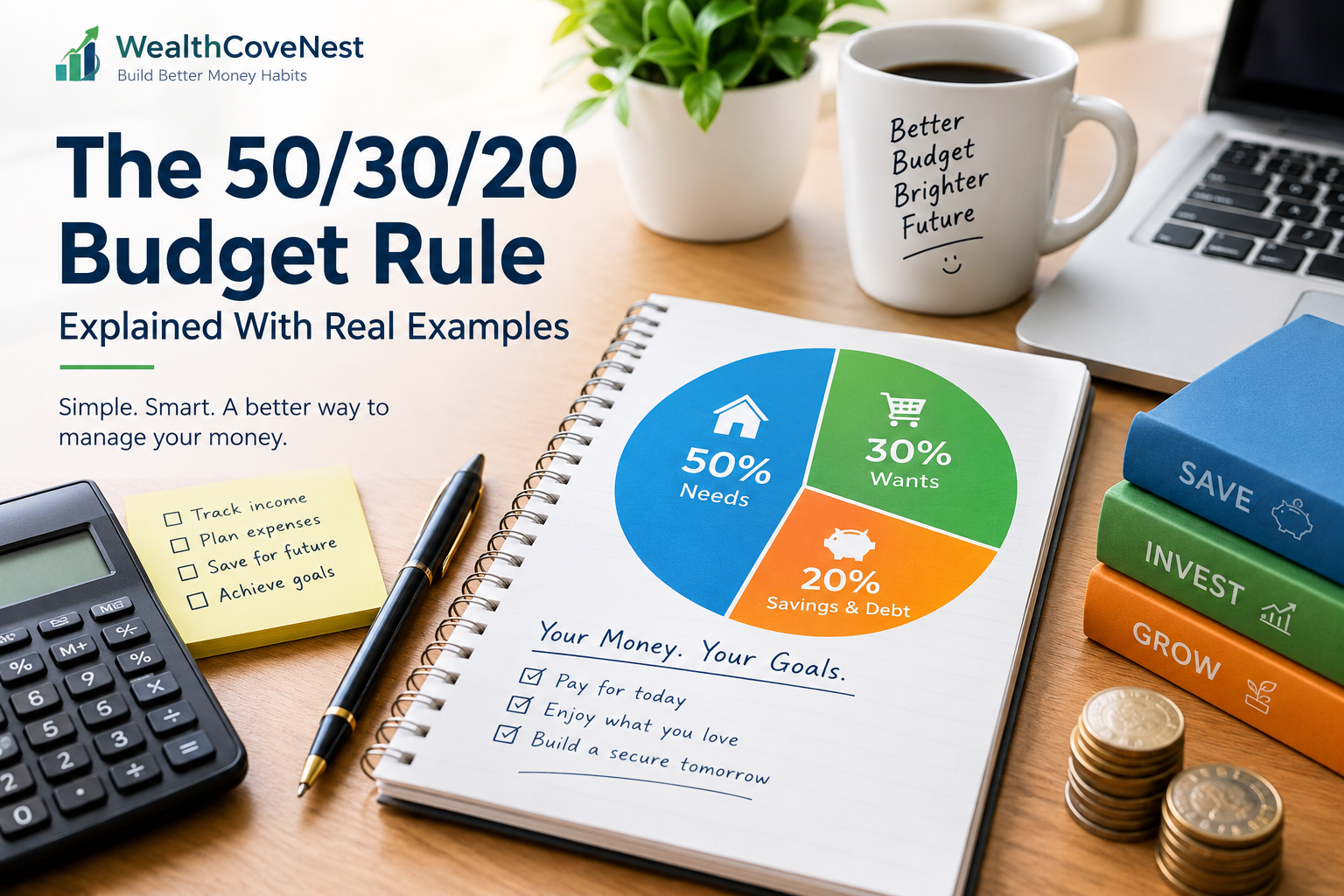
The 50/30/20 Budget Rule is a money management method that suggests dividing your after-tax income into three main categories.
50% goes toward needs: These are essential expenses such as housing, groceries, basic utilities, transportation and necessary insurance.
30% goes toward wants: These include optional purchases such as dining out, entertainment, hobbies, subscriptions and holidays.
20% goes toward savings and debt repayment: This portion can support emergency savings, retirement contributions, future purchases and repayment of outstanding debt.
The main purpose of the Budget Rule is to help you balance today’s expenses with tomorrow’s financial needs. It creates a starting point for making spending decisions without requiring a complicated spreadsheet. The Consumer Financial Protection Bureau explains this budgeting approach in its financial education materials. However, it also notes that budgeting percentages are guidelines and may not suit every financial situation.
How Does the Budget Rule Work?
To use the Budget Rule correctly, begin with your net monthly income. This means the money you actually receive after taxes and other payroll deductions. If you earn a salary, check your payslip. If you work independently or receive irregular income, estimate your average monthly take-home earnings using past income records. For an irregular income, consider using a conservative estimate rather than relying on your best month.
Next, multiply your monthly income by each percentage.
- Needs: monthly income × 0.50
- Wants: monthly income × 0.30
- Savings and debt repayment: monthly income × 0.20
These calculations give you three initial targets. The Budget Rule then helps you compare your actual expenses with those targets and identify areas that may need adjustment. For example, if your essential expenses exceed 50% of your income, you may need to reduce flexible spending or temporarily change the percentages. You should not ignore necessary bills simply to meet a budgeting formula.
Real Example: A Monthly Income of $3,000
Imagine that your monthly take-home income is $3,000. The following table shows how the Budget Rule divides that amount.
| Category | Percentage | Monthly amount |
|---|---|---|
| Needs | 50% | $1,500 |
| Wants | 30% | $900 |
| Savings and debt repayment | 20% | $600 |
| Total | 100% | $3,000 |
Under this example, you would aim to keep essential expenses around $1,500. You could allocate up to $900 to optional spending and direct $600 toward savings or eligible debt payments. Suppose your needs include $900 for rent, $300 for groceries, $150 for transportation, and $150 for utilities and insurance. These expenses total $1,500.
You could then use the wants category for occasional restaurant meals, entertainment and personal purchases. The remaining $600 could support an emergency fund, retirement savings and additional debt repayment. This example shows how the Budget Rule can turn a general financial goal into a practical monthly plan. Your actual expenses will depend on your location, household size and personal responsibilities.
What Counts as a Need, a Want or Savings?
Correctly classifying expenses is important when applying the Budget Rule. Some purchases may fit different categories depending on why you need them and how much they cost.
Needs
Needs are expenses required to maintain a safe and reasonably stable life. Examples include rent or mortgage payments, basic food, essential transport, utilities and necessary medical expenses.
Not every expense in these categories is automatically essential. For instance, basic transport to work may be a need, while an expensive vehicle upgrade may be a want.
Wants
Wants are purchases that improve comfort or enjoyment but can usually be reduced or postponed. Examples include premium streaming services, luxury clothing, costly hobbies, and frequent restaurant visits.
You do not have to eliminate wants to follow the Budget Rule. The goal is to spend intentionally while keeping optional purchases within an affordable limit.
Savings and Debt Repayment
The final category supports future financial stability. It may include emergency savings, retirement contributions, money set aside for education, and additional payments toward debt.
Continue making required minimum debt payments on time. When deciding where to direct extra money, consider interest rates, penalties, emergency savings needs, and the terms of your loans.

Benefits of Following the Budget Rule
One major benefit is simplicity. You can start with three categories rather than tracking every expense in detail. This makes the Budget Rule approachable for beginners who want to improve their financial habits. Another advantage is better spending awareness. When you compare your actual expenses with your targets, you may discover subscriptions or optional purchases that no longer provide much value.
The method can also encourage consistent saving. Setting aside money for future needs becomes part of your monthly plan instead of something you do only when cash remains. Finally, the Budget Rule gives you a framework for financial conversations. Couples and families can use the categories to discuss shared priorities and agree on spending limits. However, a budgeting method does not automatically increase your income or remove financial pressure. Its value depends on how well it reflects your actual circumstances.
Common Mistakes to Avoid
A common mistake is treating the percentages as fixed requirements. If housing costs consume 60% of your income, forcing all essential spending into 50% may be unrealistic. Adjust the plan to reflect your current situation. Another mistake is forgetting irregular expenses. Annual insurance premiums, school fees, vehicle repairs, and seasonal bills can disrupt a budget if you do not plan for them. Estimate these costs and set money aside each month where possible.
Some people also classify every debt payment as savings. Required loan payments and additional debt repayments should be tracked clearly so you understand how much money is going toward existing obligations and how much is building accessible savings.
The Budget Rule can also become less useful when people stop reviewing their spending. Check your budget regularly and update it when your income, household needs, or living costs change. Finally, do not sacrifice essential food, housing, healthcare, or minimum debt payments to make the percentages appear correct. A workable budget should protect your basic needs first.
How to Adapt the Budget Rule to Your Situation
The standard percentages are not equally practical for everyone. People living in expensive cities may spend more than half their income on housing and transportation. Families with dependents may also have higher essential costs. If your needs exceed 50%, begin by recording your necessary expenses. Then review optional spending and look for realistic savings. Depending on your circumstances, you might temporarily use a 60/20/20 or another allocation that better fits your income.
If your essential expenses are comfortably below 50%, consider directing some of the difference toward savings, debt repayment or long-term goals. People with irregular earnings can build their plans around a cautious estimate of their income. In stronger months, extra money can help cover future bills, replenish emergency savings or repay debt. The most useful Budget Rule is one you can maintain without neglecting essential responsibilities. Review your plan monthly and change it when your circumstances change.

FAQs About the 50/30/20 Budget Rule
Q1. What is the 50/30/20 Budget Rule?
It is a budgeting method that allocates 50% of take-home income to needs, 30% to wants, and 20% to savings and debt repayment.
Q2. Is the Budget Rule suitable for beginners?
Yes. Its three categories make it relatively easy to understand and apply. Beginners can start by recording their income and essential expenses.
Q3. Should I use gross income or take-home pay?
Use take-home pay after taxes and payroll deductions. This gives you a more realistic amount to allocate toward expenses and savings.
Q4. What if my needs cost more than 50% of my income?
Adjust the percentages to fit your circumstances. Focus on essential bills first, then review flexible spending and look for realistic ways to improve your budget.
Q5. Can the Budget Rule help me pay off debt?
Yes. The savings and debt repayment category can include additional debt payments. Continue meeting required minimum payments and consider your interest costs and emergency savings needs.
Final Thoughts
The 50/30/20 Budget Rule provides a simple starting point for managing income, controlling optional spending, and making progress toward financial goals. Its three categories can help you understand where your money goes and identify changes worth making.
Start by calculating your take-home income and recording your regular expenses. Compare your spending with the suggested percentages, then adjust the plan to reflect your real needs. Even small improvements can make your finances easier to manage over time.
Remember that a budget should support your life rather than create unnecessary pressure. Use the method as a flexible guide, review it regularly, and focus on building financial habits you can maintain.
2 thoughts on “The Best 50/30/20 Budget Rule Explained With Real Examples”