Introduction
Managing money is about more than earning a good income. It also means paying bills on time, preparing for unexpected expenses, reducing financial stress, and working toward future goals. A Wellness Checklist can help you understand how well your current money habits support these needs and where you may need to make changes.
Many people focus on their bank balance without looking at the bigger picture. You might earn enough to cover your expenses but have little savings for emergencies. Alternatively, you may have savings but struggle with debt or lack a clear plan for retirement. A Wellness Checklist helps you review these different areas together instead of judging your financial situation by one number.
The good news is that you do not need to be wealthy to improve your financial well-being. Small and consistent steps can help you manage money with greater confidence. This guide explains how to assess your finances and create a practical plan for improvement.

What Is Financial Wellness and Why Does It Matter?
Financial wellness means having enough control over your everyday finances while preparing for future needs and maintaining the freedom to make meaningful choices. According to the Consumer Financial Protection Bureau (CFPB) financial well-being resources, it includes managing monthly expenses, handling financial shocks, making progress toward goals and having freedom of choice.
A Wellness Checklist turns these broad ideas into questions you can answer about your own financial life. It encourages you to look at your income, spending, savings, debt, protection, and future plans. Financial wellness does not look the same for everyone. A student may focus on controlling education costs and building savings.
A family may prioritize housing expenses and insurance. Someone approaching retirement may concentrate on sustainable income and healthcare costs. The purpose of this Wellness Checklist is not to compare yourself with others. It is to understand your starting point and identify practical actions that fit your circumstances.
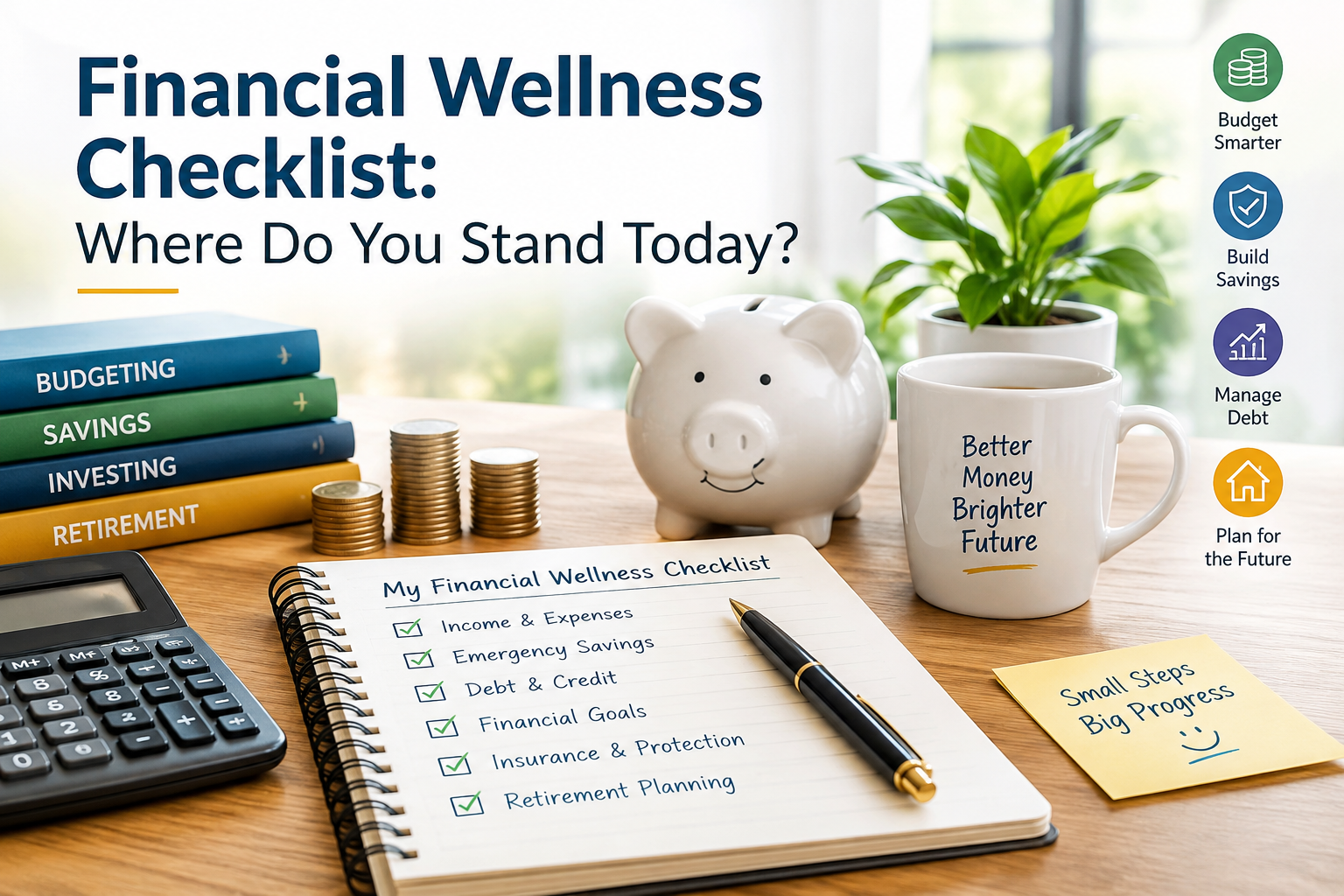
Review Your Income and Monthly Expenses
The first step is understanding where your money comes from and where it goes. Review your income from employment, self-employment, business activities, investments, or other reliable sources. Next, list your regular expenses. Include housing, groceries, utilities, transportation, debt payments, insurance and personal spending. Remember to account for irregular costs such as annual fees, home repairs, school expenses, or vehicle maintenance.
This Wellness Checklist becomes more useful when you compare your actual spending with your income instead of relying on estimates. For example, imagine you earn $2,500 each month and spend $2,350. You have $150 remaining before any unexpected costs. Reviewing your expenses may reveal a subscription you no longer use or a flexible expense you can reduce. Even a small adjustment could provide more room for savings.
Ask yourself: Can I pay my regular bills without borrowing money or repeatedly using savings?
If the answer is no, start by tracking your spending for one month. Focus on essential expenses first and identify realistic changes rather than attempting an extreme budget.
Check Your Emergency Savings
Unexpected expenses can disrupt even a carefully planned budget. A medical bill, urgent repair, temporary loss of income, or family emergency may require money that you have not planned to spend. A Wellness Checklist should therefore include an assessment of your emergency savings. The CFPB’s emergency fund guide explains how dedicated savings can help people manage unexpected costs and avoid relying entirely on loans or credit cards.
Start by identifying how much money you could access quickly without taking on additional debt. Then estimate your essential monthly expenses to understand how long your current savings could support you. Some financial guides suggest building savings equal to several months of essential expenses. However, the right target depends on your income stability, household responsibilities, health needs, and access to other support.
If saving a large amount feels impossible, begin with a smaller goal. You might save a fixed amount after each payday or transfer a small percentage of your income when affordable. This Wellness Checklist is about building resilience over time, not achieving a perfect savings balance immediately.
Evaluate Your Debt and Credit Obligations
Debt can help people pay for major purchases or manage specific needs. However, high interest costs and missed payments can limit your ability to save and meet other goals. Write down each debt balance, interest rate, minimum payment, and due date. Include credit cards, personal loans, education loans, mortgages, and other borrowing that applies to your situation.
Use this Wellness Checklist to determine whether your debt payments fit comfortably within your budget. Check whether balances are decreasing and if you are regularly paying more in interest than you expected. If you have several debts, consider prioritizing the highest-interest balance while maintaining required payments on other accounts. Another approach is paying the smallest balance first to build motivation.
The best method depends on your interest costs, available cash, and personal preferences. Also review your credit report where this service is available. Correct errors and keep track of payment deadlines. Credit reporting systems differ between countries, so check the official guidance that applies to your location.
Set Clear Financial Goals
Good financial planning becomes easier when you know what you are working toward. Your goals might include building emergency savings, paying off debt, buying a home, funding education, or preparing for retirement. A useful Wellness Checklist separates goals by time frame. Short-term goals may involve paying an upcoming bill or saving for a necessary purchase. Medium-term goals could include building a larger savings reserve. Long-term goals may involve retirement or property ownership.
Give each goal a clear target and a realistic time frame. For example, if you want to save $1,200 over twelve months, you would need to set aside an average of $100 each month, assuming no interest or withdrawals. Review this Wellness Checklist whenever your income, family needs, or priorities change. A goal that made sense last year may no longer suit your circumstances.

Review Insurance and Financial Protection
Financial wellness also involves protecting yourself against risks that could create serious financial difficulties. Depending on your circumstances and country, relevant protection may include health insurance, home or renters insurance, vehicle insurance, disability coverage, or life insurance for people who depend on your income.
Use your Wellness Checklist to identify major risks and review if your current coverage addresses them. Check policy limits, deductibles, exclusions, renewal dates, and premium costs. Avoid paying for coverage that does not meet your needs, but do not cancel essential protection simply to reduce monthly expenses.
A large uninsured loss could cost much more than the premiums you save. You should also consider basic financial security measures, such as protecting banking passwords, enabling account alerts, and keeping important financial records accessible.
Prepare for Retirement and Long-Term Needs
Retirement planning is important even if retirement feels far away. Starting early may give savings and investments more time to grow, although investment returns are never guaranteed. This Wellness Checklist should include any workplace retirement benefits, pension entitlements, personal retirement accounts, or other arrangements available in your country.
Review your expected retirement expenses and possible income sources. Consider housing, healthcare, daily living costs, inflation, and how long your savings may need to last. If you invest for retirement, make sure your choices reflect your time horizon, risk tolerance, and financial responsibilities. Diversification can help spread investment risk, but it cannot eliminate losses.
If you have not started saving, avoid assuming that you are too late. Review your budget and identify an affordable first step. A qualified financial professional may help you evaluate complicated pension, tax, or investment decisions.
Score Your Financial Wellness Checklist
Once you have reviewed the main areas, assess how comfortable you feel with each one. This simple exercise is a personal tracking method rather than a scientifically validated financial score.
Give yourself one point for each statement that applies:
- I understand my monthly income and expenses.
- I can usually pay my bills on time.
- I have some savings for unexpected expenses.
- I have a manageable plan for paying down debt.
- I have clear financial goals.
- I have reviewed my relevant insurance needs.
- I have started planning for retirement or future needs.
- I regularly review my accounts and financial records.
Your results:
| Score | What it may suggest |
|---|---|
| 0–2 | Start with essential bills, spending and immediate financial needs. |
| 3–5 | Strengthen your weaker areas and build consistent habits. |
| 6–8 | Maintain your progress and review your plan as life changes. |
Your score is not a judgment of your worth or a complete measure of financial health. A person with a low income may manage money carefully yet struggle to save because essential costs are high. Your circumstances matter just as much as the number.
Common Mistakes to Avoid
One common mistake is trying to improve every financial area at once. This can create stress and make it harder to maintain progress. Choose one or two priorities and build from there. Another mistake is comparing your finances with people who have different incomes, family responsibilities, or living costs. Social media often presents an incomplete picture of other people’s financial situations.
Avoid treating this Wellness Checklist as a one-time task. Your needs can change after a job change, relocation, new family responsibility, or unexpected expense. Reviewing your finances regularly helps you adjust your plan before small problems become larger ones. Finally, be careful with financial products that promise unusually high returns or guaranteed results. Understand the costs, risks, and terms before making decisions.

Frequently Asked Questions
Q1. What is a financial Wellness Checklist?
A financial Wellness Checklist is a practical review of your income, expenses, savings, debt, protection, and financial goals. It helps you identify strengths and areas that need attention.
Q2. How often should I complete a Wellness Checklist?
Review your finances monthly and complete a broader review every three to six months. You may also want to reassess after a major life or income change.
Q3. Can I improve financial wellness with a low income?
Yes. You can begin by tracking expenses, checking available support, avoiding unnecessary fees, and saving small amounts when possible. However, limited income may restrict how much you can save.
Q4. What is the most important part of a Wellness Checklist?
There is no single priority for everyone. Paying essential bills and addressing urgent financial risks usually come first. Your next step depends on your circumstances.
Q5. Does a Wellness Checklist guarantee financial security?
No. It can help you identify problems and make informed decisions, but it cannot prevent every emergency, investment loss, or change in income.
Final Thoughts
Financial wellness is an ongoing process rather than a destination that you reach once and never revisit. A practical Wellness Checklist can help you understand your current position, recognize financial risks, and choose realistic steps toward greater stability.
Start with the area that needs the most attention. Track your spending, build savings at a manageable pace, review your debt, and set clear goals for the future. Return to your Wellness Checklist regularly and adjust it as your circumstances change.
You do not need to make every change today. Consistent decisions and a realistic plan can help you build a healthier relationship with money over time.
4 thoughts on “Financial Wellness Checklist: Where Do You Stand Today?”